

Remember the days when a clipboard, a decent sound system, and a pot of strong coffee were all you needed to pull off a successful conference? Those days are gone. We are operating in a completely different reality now.
As we move deeper into 2026, the playbook for organizing gatherings has been rewritten by rapid advancements in artificial intelligence and a massive cultural shift in what attendees actually want. The old checklists are obsolete. Today, people don’t just attend events; they scrutinize them for sustainability, accessibility, and authentic connection. If you are still running your events like it’s 2023, you aren’t just falling behind—you are actively risking your brand’s reputation.
Navigating this landscape requires more than just logistical skill; it demands emotional intelligence and tech-savviness. Whether you are organizing a corporate summit in the Financial District or a creative gala in Queen West, the margin for error has shrunk. Let’s dive into the pitfalls that are tripping up even seasoned professionals this year.
1. The AI Trap: Sacrificing Human Connection for Tech Efficiency
We all love how AI streamlines workflows, but there is a fine line between efficiency and alienation. A common trend we are seeing is organizers leaning too heavily on automation to handle attendee interactions.
The Mistake:
It’s tempting to deploy generic AI avatars for your help desk or fully automate the check-in process to cut costs. However, relying solely on algorithms creates a sterile environment. When a guest has a complex issue or simply needs a warm welcome, talking to a screen that mimics empathy feels cold and dismissive. It strips the “hospitality” right out of the hospitality industry.
The Fix:
Use technology to clear the clutter, not the connection. Let AI handle the backend data crunching, scheduling, and basic FAQs, but ensure human staff are front and center for greeting and complex problem-solving. Think of AI as your silent partner that frees up your team to look people in the eye and shake their hands. High-tech should always enable high-touch.
2. Treating Virtual Attendees as Second-Class Citizens (The Hybrid Disconnect)
The buzzword “hybrid” has been around for years, yet so many planners still get it wrong. They treat the online component as a backup plan rather than a primary experience.
The Mistake:
Simply setting up a camera at the back of the room and streaming the live stage is not a hybrid event; it’s a surveillance feed. This “fly-on-the-wall” approach alienates remote participants, making them feel like afterthoughts. If they can’t ask questions, network, or influence the session, they will tune out within ten minutes.
The Fix:
You need to curate two distinct but connected journeys. Appoint a dedicated “Virtual Emcee” whose sole job is to engage the online crowd. Create exclusive digital breakout rooms and behind-the-scenes content that the in-person audience doesn’t see. This ensures that buying a virtual ticket feels like a privilege, not a compromise.
Also Read: Trends in floral decor for corporate events and weddings
3. Layout Negligence: Ignoring Neurodiversity and Flow
The physical design of a venue does more than just hold people; it dictates how they feel and behave. Ignoring the sensory experience is a major oversight in modern event planning Toronto venues are finally beginning to address.
The Mistake:
Cramming as many booths and seats as possible into a floor plan is a recipe for sensory overload. Loud music, flashing screens, and tight aisles can be overwhelming for neurodivergent attendees (and honestly, for everyone else too). When people are overstimulated, they leave early or disengage to protect their energy.
The Fix:
Adopt a neuro-inclusive design philosophy. This means creating wider aisles for better flow and designating “Quiet Rooms”—low-light, noise-free zones where attendees can decompress. Use clear, color-coded signage to help people navigate intuitively. A comfortable brain is an engaged brain.
4. Greenwashing Instead of Practicing Genuine Sustainability
Attendees in 2026 are savvy. They can spot performative eco-friendliness from a mile away, and they aren’t afraid to call it out on social media.
The Mistake:
Swapping plastic straws for paper ones while serving beef-heavy menus and ignoring the carbon footprint of flying in speakers is the definition of greenwashing. It’s a superficial gesture that ignores the massive environmental impact of waste management, energy consumption, and travel logistics.
The Fix:
Go for impact over optics. Collaborate with venues that have LEED certification and implement a zero-waste strategy for catering (think digital menus and donating leftovers). meaningful carbon offsetting for travel is also non-negotiable. Authenticity in your sustainability efforts builds trust and aligns your event with modern values.
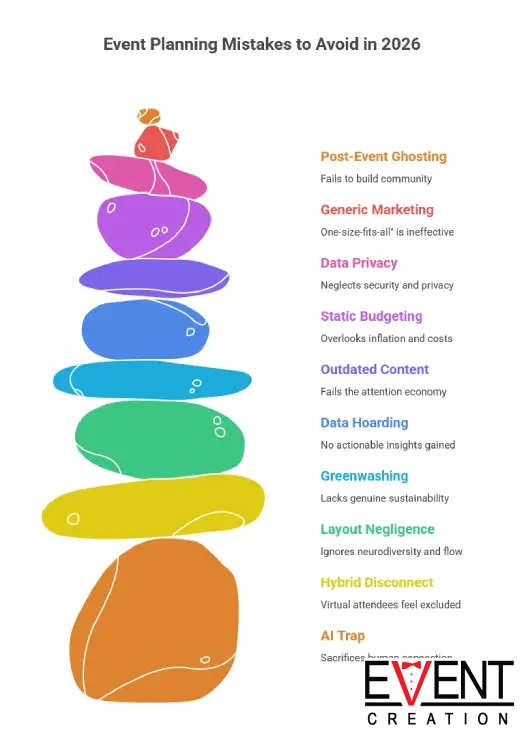
5. Data Hoarding: Collecting Metrics Without Actionable Insights
We have more data than ever, but most planners are drowning in numbers rather than swimming in insights. Collecting data just for the sake of it is a waste of resources.
The Mistake:
Many organizers gather extensive registration details and track attendee movement, only to let that data sit in a spreadsheet post-event. If you aren’t using this information to tailor the experience in real-time, you are missing the point. It’s like knowing your friend’s favorite food but serving them a generic sandwich anyway.
The Fix:
Shift from data collection to data activation. Use tools that offer real-time sentiment analysis. If the data shows that a particular session is trending down in engagement, have a plan to pivot. Use pre-event data to customize breakout suggestions for attendees. Make the data work for the guest experience, not just for your post-event report.
Also Read: Event decor mistakes to avoid: lessons from real Toronto events
6. Failing the “Attention Economy”: Sticking to Outdated Content Formats
The attention span of the average attendee has shifted drastically. The old format of “sage on the stage” delivering a 60-minute monologue is the fastest way to kill the room’s energy.
The Mistake:
Booking hour-long keynote speeches, especially for Gen Z and younger Millennial audiences, is a strategic error. Long-form passive consumption doesn’t fly in the TikTok era. If the content isn’t snappy, interactive, or visually stimulating, you will see a sea of blue light as the audience turns to their phones.
The Fix:
Embrace micro-learning and interactivity. Break sessions down into 15-20 minute “power talks” followed by Q&A or gamified discussions. Use live polling and interactive panels where the audience drives the conversation. Keep the pace brisk and the content digestible.
7. Static Budgeting: Overlooking Inflation and Cybersecurity Costs
The financial landscape is volatile. Relying on pricing models from a couple of years ago will leave you in the red before the doors even open.
The Mistake:
A classic error in event planning Toronto organizers face is underestimating the hidden costs of doing business in 2026. Planners often stick to rigid budgets that don’t account for sudden inflation spikes in catering or, more critically, the rising costs of cybersecurity insurance and tech infrastructure.
The Fix:
Adopt a dynamic budgeting model. Your contingency fund needs to be robust—aim for at least 15-20% of the total budget. Explicitly allocate funds for digital security and data protection, as these are no longer optional “add-ons” but essential operational costs.
8. Neglecting Data Privacy and Biometric Security
With facial recognition and biometric check-ins becoming standard, the responsibility to protect that sensitive data has skyrocketed.
The Mistake:
Deploying facial recognition technology for smoother entry without obtaining explicit, informed consent is a legal and ethical minefield. Attendees are increasingly protective of their biometric data. Assuming you can just “scan and store” faces without clear protocols is a breach of trust and potentially a violation of GDPR and local privacy laws.
The Fix:
Transparency is your best defense. Clearly communicate how biometric data will be used, how long it will be stored, and when it will be deleted. Always offer a non-biometric, traditional check-in alternative for those who aren’t comfortable with the tech. Respecting privacy is a form of customer service.
Also Read: How to choose the right event planner vs DIY: pros & cons
9. “One-Size-Fits-All” Marketing: The Death of Generic Invitations
Your attendees are not a monolith. Sending the same email blast to a CEO, a student, and a vendor is lazy marketing that yields poor conversion rates.
The Mistake:
Using a “spray and pray” approach with your email campaigns. When a VIP receives a generic message prompting them to “buy a student pass,” it shows you don’t know who they are. It signals that your event is generic, and their presence isn’t specifically valued.
The Fix:
Leverage your CRM for hyper-personalization. Segment your lists based on behavior, past attendance, and job title. Craft specific messaging for each group that speaks to their unique pain points and desires. A tailored invitation feels like a personal request, not a marketing spam.
10. Post-Event “Ghosting”: Failing to Build a 365-Day Community
The event shouldn’t end when the venue lights turn off. The biggest missed opportunity is letting all that built-up energy and connection dissipate instantly.
The Mistake:
Going silent the moment the event closes. Many planners send one “thank you” email and then disappear until it’s time to sell tickets for next year. This “ghosting” breaks the relationship and forces you to start from scratch with your marketing efforts every single cycle.
The Fix:
Transform your event from a moment in time into a year-round movement. Create a community platform where attendees can continue discussions, access content, and network throughout the year. Feed them value—articles, mini-webinars, or meetups—during the off-season. This keeps your brand top-of-mind and makes selling next year’s tickets infinitely easier.
FAQ
Why is neuro-inclusive design important for events in 2026?
It ensures that attendees with sensory sensitivities (like autism or ADHD) feel comfortable, allowing everyone to stay engaged and energized throughout the event.
How can I make my event sustainable without greenwashing?
Focus on measurable actions like zero-waste catering, digital signage, and carbon offsetting, rather than just superficial changes like paper straws.
What is the biggest challenge with hybrid events?
The “disconnect” where remote attendees feel ignored. You must create specific content and engagement tracks just for them, separate from the in-person crowd.
How does AI help in modern event planning?
AI handles repetitive tasks like data analysis, scheduling, and basic customer service, freeing up your team to focus on creative strategy and human interaction.
Why should I care about data privacy at my event?
With biometric tech like facial recognition, protecting attendee data is critical. Mishandling it can lead to legal issues and a total loss of trust.
Planning an event in 2026 is a balancing act. It’s about leveraging the incredible power of AI and data without losing the warmth and unpredictability of human connection. It’s about designing spaces—both physical and digital—that respect the diversity and privacy of your guests.
Whether you are navigating the complexities of event planning Toronto regulations or managing a global hybrid summit, the goal remains the same: to create an experience that resonates. Avoid these ten mistakes, and you won’t just host an event; you’ll create a legacy.
Ready to elevate your next event experience?
Don’t let these common pitfalls derail your vision. Contact Event Creation today, and let’s build something extraordinary together.




Leave a comment
Your email address will not be published. Required fields are marked *