Bounce House Rental in Toronto: How to Pick the Right Size
Updated
A bounce house rental in Toronto is decided by three numbers, not by the photo on the product page: the footprint of the unit, the age range it is rated for, and how many children it holds at once. Measure the space you actually have, look at the ages of the children who will really use it, then match a unit to both. Surface and power follow from there.
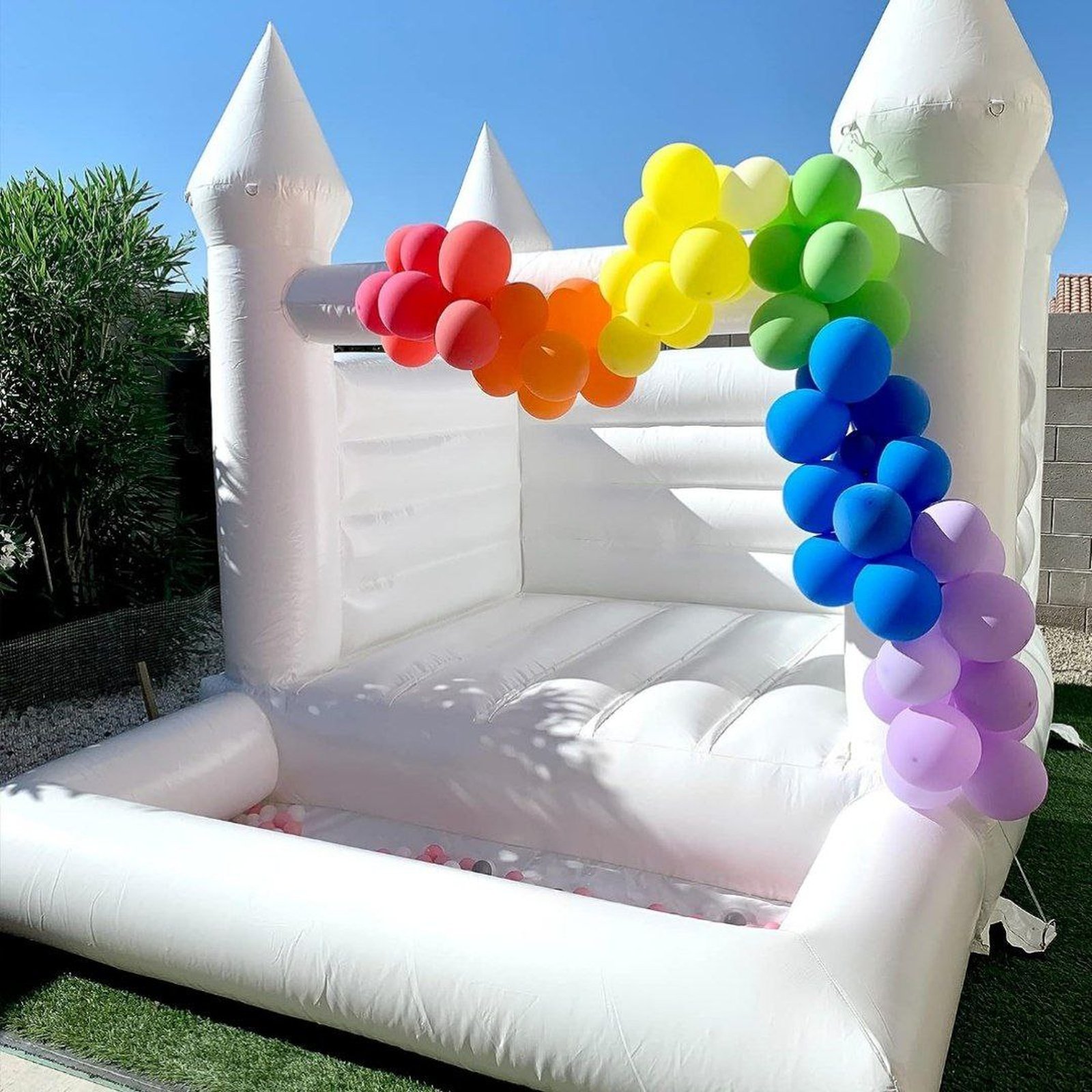
Our inflatables run from a small bounce house with a jumping area and slide, rated for ages 5 to 12 with 3 to 4 players, up to a bounce castle with a ball pit that measures 10 by 8 by 8 feet, rated for ages 3 to 8 with 4 players. Those differences look small in a listing and matter a great deal on the day.
The three numbers that decide a bounce house rental in Toronto
Footprint is the inflated unit only. It does not include the room children need to climb in and out, the space an inflatable takes as it moves under use, the anchor lines, or the blower sitting beside it. Age range is a rating, not a suggestion, and it is set by the size of the unit and the height of its walls and slide. Player count is the number of children who can be inside at once, which on our units means four or five, not a queue of twelve.
Read all three together across the kids inflatables and soft play range. The small bounce house is rated ages 5 to 12, 3 to 4 players, indoor or outdoor. The bounce castle with ball pit is 10 by 8 by 8 feet, ages 3 to 8, 4 players. The giant slide bouncer is ages 3 to 8, 3 to 4 players. The pool water slide castle is 10.8 by 8 by 7 feet, ages 3 to 8, 4 to 5 players.
Measure the space before you choose a unit
Add a clear metre on every side beyond the stated footprint. That margin is where children land when they come off the edge, where the entry step sits, and where anchor lines and the blower go. A unit with a 10 by 8 foot footprint therefore wants roughly 13 by 11 feet of clear, flat ground with nothing hard inside that margin: no fence posts, no barbecue, no planters, no glass doors, no patio furniture pushed to the side.
Then measure up. A unit listed at 8 feet high needs more than an 8 foot ceiling, because the top moves under use and children stand while they bounce. Check light fixtures, ceiling fans, sprinkler heads and low beams inside that column. Also measure the route in: doorway widths, stair turns and gate openings, since the packed unit and blower have to reach the spot before anything inflates.
Why the 10 by 8 by 8 foot castle will not fit a basement
A typical finished Toronto basement gives you somewhere around 7 feet of headroom once the floor and ceiling are done, and often less under ducting. The bounce castle with ball pit stands 8 feet tall, so it will not fit a standard basement, and pressing an inflatable against a ceiling is not a workaround. For a basement, look at the smaller bounce house and confirm your own measured height with us first.
Garages, halls and back gardens
A garage often has the height a basement lacks, but check the door track and any storage along the walls. Rented halls vary, so ask the venue for the clear ceiling height rather than guessing from the room’s look. Back gardens usually have the room, and the limiting factors move to surface, slope and the distance from the nearest working outlet.
Surface: level grass, patio, deck and slope
Level grass is the ideal surface. It is soft, it drains, and it takes ground pegs, which is the anchoring method these units are designed around. Before setup, walk the area and clear stones, sticks, dog waste, sprinkler heads and anything sharp, and look up for branches inside the height column. If you have watered recently, give the lawn time, because saturated ground holds a peg poorly and churns into mud under four bouncing children.
Patio, deck, driveway and indoor floors cannot take pegs, so those installations are anchored with weights instead. Never let anyone drill or peg a deck board or a paver. A real slope rules a unit out: on noticeable grade the inflatable settles to the low side, children follow it, and the entry ends up above or below the ground it should meet. If the only open space slopes, tell us when you enquire and we will look at the unit and the position together.
Power: one outlet, one blower, running the whole time
Every inflatable needs an outlet within reach of a blower that runs continuously for the whole rental. These units are not inflated once and left standing; the blower keeps them up, so if power drops the unit comes down. Confirm which outlet you will use, that it works, and that it is close enough for a short, sensible cord run rather than three extensions chained across a lawn.
Cover or tape any cord that crosses a path where guests and children walk, and keep the route away from the food table and any water feature. In a rented hall, ask which circuit the outlet is on, because a blower sharing a circuit with a kettle, a warming tray or sound equipment can trip it mid party. Park locations often have no accessible power at all, and we do not supply generators, so that usually decides the question.
Do not run two age groups in the same unit
A unit rated for ages 3 to 8 and a unit rated for ages 5 to 12 exist because a five year old and an eleven year old should not be bouncing together. When they are, the older children set the movement of the floor and the younger ones lose their footing, land underneath, or get caught on the slide. That mismatch, not the equipment, is where most minor injuries at children’s parties come from.
So book for the ages that will actually use it, and if your guest list spans both groups, run timed turns instead of one free for all. Rotations of ten to fifteen minutes, youngest group first while the older children are occupied elsewhere, work well and are easy for one adult to hold. Keep to the stated player count while you do it. Four players means four, even when six children are waiting and keen.
Supervision, weather and venue rules
An adult has to be watching the whole time the inflatable is in use, and that is not something a rental can do for you. Name one adult per turn who is not also hosting, serving food or greeting guests. The usual rules hold: shoes, glasses and hard toys off, no food or drink inside, no somersaults, and everyone out if wind picks up or rain starts. We do not certify safety or load limits, so the manufacturer’s rating and our on-site team’s guidance apply.
Weather decides outdoor use on the day, not the week before. Anything booked between autumn and spring needs an indoor fallback chosen in advance, with its height measured, rather than a hope about the forecast. Park permits and venue rules on inflatables, anchoring and power override anything we would otherwise suggest, so get the answer from the city or the venue in writing before you plan the layout around a bouncer.
Where an inflatable sits in the party running order
An inflatable is free play, so it belongs at the start and the middle of a birthday party rather than as the finale. A running order that works: arrival and open bouncing for the first forty five minutes while parents settle, then the unit off for a performer set, then food and cake, then a short second bounce window before pickup. Turning it off gives you a clean break and stops the room competing with the blower for attention.
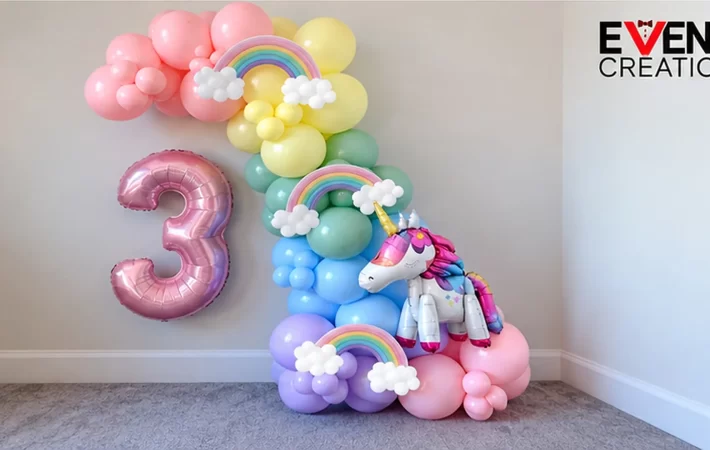
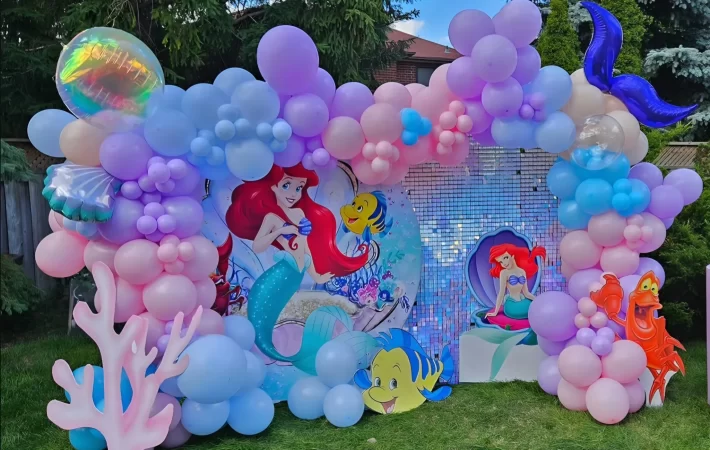
Place it where a seated adult can see it, and away from the cake table and the photo area so nobody crosses a bouncing queue carrying a plate. Keep decoration on the opposite wall, where a 12 foot balloon garland starts at a website-listed price of $250 and photographs without children running through the frame. A balloon twister from our entertainment range, listed from $200 for one hour, fills the window while the unit is off.
The toddler end, and what to book alongside
Every bouncer we list starts at age three, so a party with walkers and two year olds needs something else for them. The soft play animal pieces cover that end: low, stable shapes children climb and sit on at their own pace, set out on a mat away from the bouncing, which also gives nervous older children somewhere to go. Families often run both, with the soft play as the calm corner.
From there the rest of the event extras list fills in around the inflatable rather than competing with it. Tell us the room or garden dimensions, the ceiling height, the surface, the ages and the guest count when you enquire, and we will tell you which unit fits and where it should stand. Recent setups across Toronto, North York, Scarborough, Vaughan and Markham are in our portfolio if you want to see the scale.
Get the three numbers straight first, the footprint with a clear metre around it, the age range, and the players allowed at once, and the rest of the booking becomes simple. Send us your measurements, surface, nearest outlet and the ages attending, and we will tell you which unit suits. Reach us through contact us or by phone at (416) 230-9723, seven days a week.
Frequently asked questions
How much space do I need for a bounce house rental in Toronto?
Take the unit’s stated footprint and add a clear metre on every side, plus headroom above. A 10 by 8 foot unit wants around 13 by 11 feet of flat, clear ground. That margin covers the entry step, children coming off the edge, the anchoring and the blower. Measure the load-in route as well.
Will a bounce house fit in my basement?
Not the tall ones. The bounce castle with ball pit is 10 by 8 by 8 feet, and a standard finished Toronto basement gives roughly 7 feet of headroom, so it will not fit. The smaller bounce house with jumping area and slide is the one to ask about indoors. Send us your measured clear height.
Can an inflatable go on a patio, a deck or a gym floor?
Yes, with weight anchoring instead of ground pegs, since nothing should be drilled or pegged into a deck board, a paver or an indoor floor. Level grass is still easier because it drains and takes pegs. A real slope is different: the unit settles downhill and children follow it, which rules that spot out.
How many children can use one at a time?
Three to five, depending on the model, and that number is the number. The small bounce house takes 3 to 4 players, the castle with ball pit 4, the giant slide bouncer 3 to 4, and the pool water slide castle 4 to 5. Run timed rotations rather than admitting a whole guest list.
Can older and younger children bounce together?
They should not. A unit rated ages 3 to 8 and one rated ages 5 to 12 suit different sizes of child, and mixing the groups is where most minor injuries happen, because bigger children control the floor while smaller ones lose their footing. Split turns by age, youngest group first.
What happens if it rains on the party day?
Weather decides outdoor use on the day itself, so anything booked between autumn and spring needs an indoor fallback agreed in advance with its ceiling height already measured. Wind matters as much as rain, and everyone comes out if either picks up. Talk to us early about the alternative space.
Does someone from Event Creation supervise the inflatable?
No. An adult from your side has to watch the whole time it is in use, and that responsibility cannot be handed to a rental. Name one person per turn who is not hosting or serving. We deliver, set up, take down and advise on placement and anchoring, but supervision is yours.
Planning your own event? Share the date, venue and the look you want. We will contact you within 24 hours to talk through design ideas and pricing.