Wedding Morning to Last Dance: Keeping One Design Through the Day
A wedding can move through several settings in one day: a preparation room, a ceremony, a reception entrance, dinner and an evening celebration. Keeping the design coherent does not mean decorating every setting in the same way. It means choosing a few ideas that can travel through the day and adapting them to each place.
A shared palette, related materials and a consistent approach to signs or flowers can connect those moments. The practical plan matters just as much. Suppliers need the same references, reused pieces need a realistic transfer window and the evening design needs to work after the light changes. This guide explains how to create continuity without making every part of the wedding look identical.
Choose a small set of design anchors
Begin with the elements that will define the day. These might be a colour family, a preferred floral character, a material finish and a style of lettering. Choose enough to give the event identity, but not so many that every object needs several special instructions.
Describe the anchors in plain language. “Soft tones, open floral shapes and warm metal accents” communicates a relationship. A list of unrelated style labels may not tell suppliers what should actually appear in the room.
Keep the anchors tied to your preferences and venue. They should help you make decisions, not become restrictions that force every meaningful personal item to match an exact shade.
Event Creation’s wedding planning and decor can develop those ideas into ceremony and reception styling around your venue, palette and priorities.
Map the day by guest experience
List the places guests will encounter in order: arrival, ceremony seating, the route to refreshments, reception entrance, dinner and evening activities. Note what each space needs to communicate or support.
Some areas need a strong focal point. Others mainly need clear directions or a small repeated detail. This distinction prevents the design from spreading too thinly across every corridor and spare surface.
Include the couple’s experience as well. You may spend time in preparation rooms or portrait locations that guests never see. Those spaces can carry a lighter connection to the design without requiring full event styling.
The map becomes a guide for where continuity matters most. It helps you choose the moments that deserve attention instead of treating the entire day as one undifferentiated decoration order.
Keep morning details connected without overcomplicating them
The morning may include personal objects, clothing, stationery and flowers used in portraits. A few related colours or materials can connect those photographs to the later celebration.
You do not need to redesign a preparation room simply to make every photograph match the reception. Focus on the details that matter to you and the practical space needed for people getting ready.
If a photographer will capture invitations or personal items, gather them in advance and communicate any meaningful details. This is more useful than adding decorative objects at the last minute solely because they fit the palette.
Keep responsibility clear for anything delivered or collected in the morning. If floral or decor services are required at that location, include the address and timing in the agreed scope rather than assuming reception arrangements cover it.
Let the ceremony have its own clear focal point
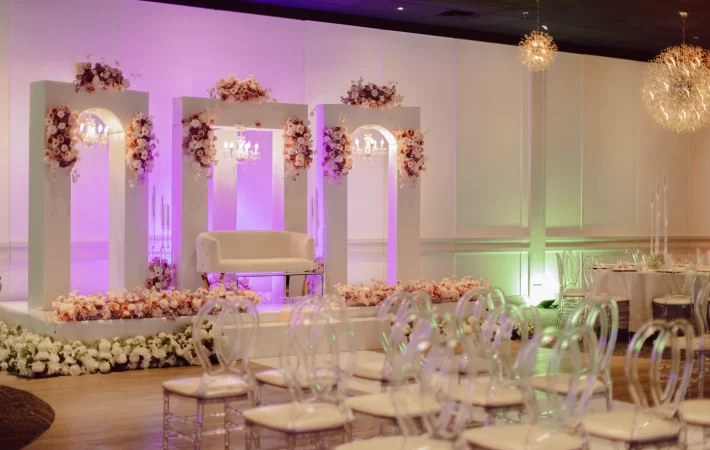
The ceremony design should frame the people and traditions at the centre of it. Its shape and scale should follow the ceremony layout, viewing angles and venue conditions.
Use the shared palette and materials to connect it to the rest of the day, but do not force it to resemble the reception exactly. Standing people, an aisle and seated guests create a different composition from a dinner table.
Provide the designer with the actual ceremony plan and any cultural or personal requirements. Your own references should lead those details; a general style description cannot communicate every meaningful practice.
Check the main photograph angle and views from the sides. A ceremony feature should support the moment without hiding faces or creating a visual barrier for guests.
Use the arrival experience to introduce the design
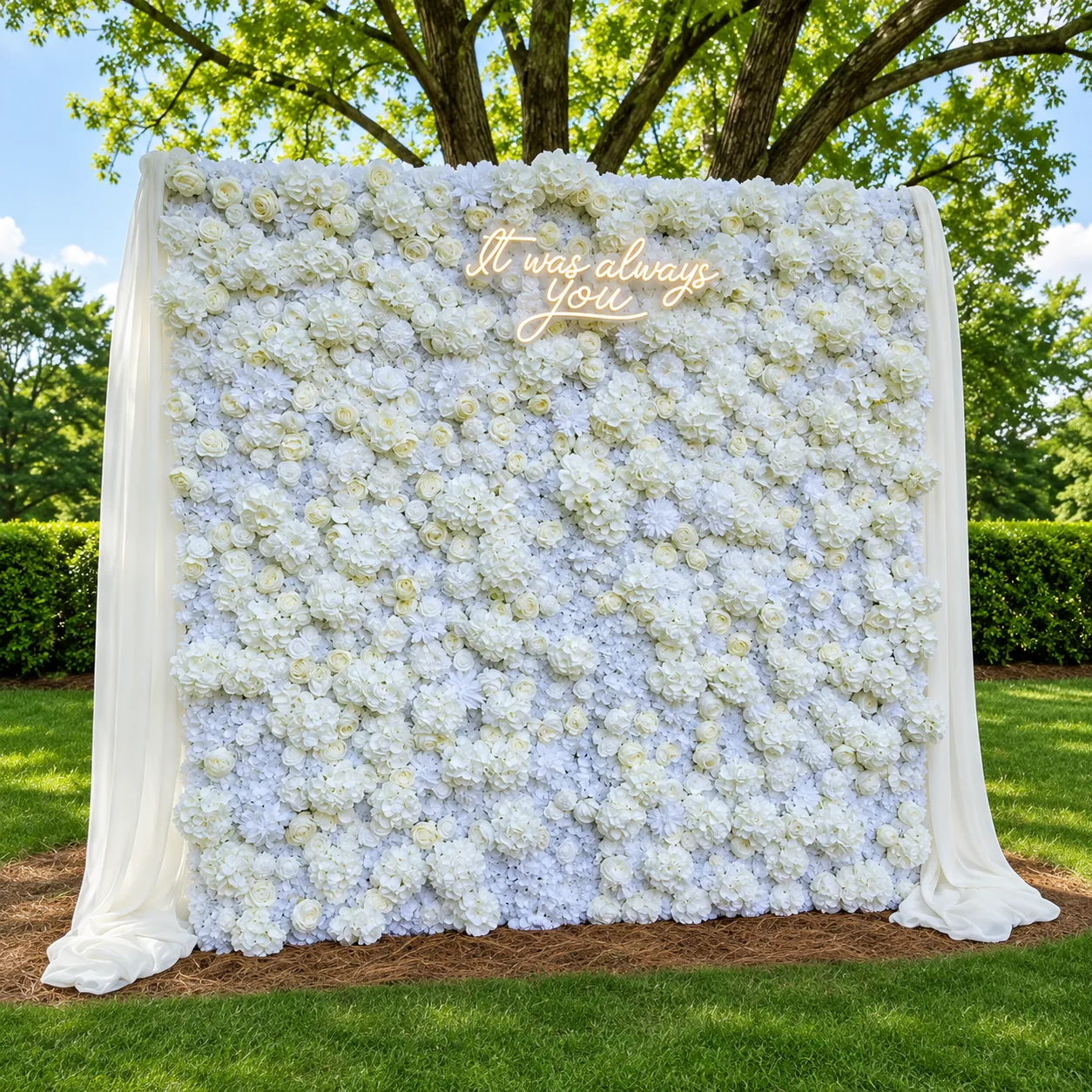
Guests often encounter the wedding style first through a welcome display or entrance. That area can introduce the palette and lettering without attempting to show every decorative idea at once.
Keep the message clear. Names, directions and event information need enough visual space to be read while people arrive and greet one another. Decorative details should support that function.
If the ceremony and reception have separate entrances, related signs can connect them. They may share a finish or type style while carrying different information and different amounts of decoration.
Event Creation’s welcome signs and event displays can be considered within the full design plan so the first impression leads naturally into the spaces guests visit next.
Adapt the reception rather than copying the ceremony
The reception is usually viewed for longer and from more positions. Tables, a dance floor, service areas and entertainment all become part of the room. The design needs to work across that wider experience.
Carry over the main palette and visual character, then adjust the scale and placement. A ceremony flower shape might reappear in table arrangements without being reproduced exactly. A material used in a sign can return in a backdrop detail.
Choose the reception’s main focal point. It may be the couple’s table, a stage or another prominent area. The rest of the room should support that focus instead of competing with several equally dominant installations.
A coherent design is recognizable across different settings because its relationships repeat, not because every object is identical.
Give tables a shared language with room for variation
Guest tables connect the large room design to an intimate experience. Guests spend time close to the linen, flowers, stationery and place settings, so those elements deserve a coordinated review.
Use repeated colours or finishes to connect the tables to the ceremony and main display. Allow their arrangement shapes to respond to conversation, service and table size.
A long table and a round table may need different floral layouts while still belonging to the same design. Matching every arrangement exactly can be less effective than preserving the palette and character in suitable proportions.
Include practical table objects in the review. Menus, table numbers and additional glasses are part of the guest’s view, even when they are absent from inspiration photographs.
Keep signs and printed details consistent
Stationery and signs often come from different sources, which can lead to small inconsistencies that accumulate through the day. Share one approved reference for lettering, colours and key wording.
Different signs can still have different sizes and layouts according to their purpose. A seating chart needs more information than a welcome panel, and a small table sign should not be treated as a scaled-down copy of a large display.
Proofread names, dates and directions before production. If wording appears in more than one place, check that the versions agree. Design consistency includes accurate information as well as visual style.
Keep final proofs together with the decor plan. This helps the event team identify the correct sign for each location and avoid using an earlier version during setup.
Plan reused pieces around time and suitability
Reusing decor can connect the day visually, but the transfer must be practical. List each piece intended for more than one location and identify its first and second roles.
Ask the supplier whether the piece suits both uses. A ceremony arrangement viewed from the front may not work on a table seen from every side. A backdrop framed around standing people may need a different composition behind seated guests.
Confirm who moves the piece, the available time and the access route. The move should not depend on family members discovering they are responsible during the celebration.
If the transfer would delay reception setup or interfere with photographs, consider a separate smaller detail for the second location. Reuse should support the timeline rather than dominate it.
Prepare for changes in light
The same colours and materials can appear different in daylight and evening lighting. Review the main decor positions under the conditions expected during their most important moments.
A reception backdrop may need to remain clear during dinner and later when the room lighting changes. Reflective surfaces, signs and floral textures can respond differently as the evening develops.
Coordinate decorative lighting with the venue and relevant suppliers. Share the planned focal areas and the moments when they will be photographed. The decor should not be considered separately from the light that makes it visible.
Do not assume that a daytime reference predicts the evening result. Ask for a design approach that works with the actual lighting plan and available power arrangements.
Connect evening activities to the established style
The evening may introduce a photo booth, entertainment or a more energetic atmosphere. Those elements can relate to the wedding design without requiring every activity to carry identical decoration.
For a booth, consider the backdrop, any approved overlay and its position in the room. The photo area should feel connected to the wedding while remaining practical for guests and the provider’s setup.
For performance or dance areas, preserve the space required by the activity. Decorative objects should not migrate onto a working area simply because the earlier part of the event has finished.
Discuss any effects or special features with the venue and supplier in advance. Their approval and operating requirements belong in the event plan alongside the visual intention.
Give every supplier one current design reference
A coherent wedding can unravel when suppliers receive different versions of the palette or layout. Keep one current design document with the approved references and the decisions relevant to each part of the day.
Include colour direction, key finishes, floral character, sign references and the latest room plans. Label images according to what they demonstrate so a supplier does not copy an unintended feature.
When a decision changes, update the main document and notify the people affected. A revised table colour may influence flowers, stationery and backdrop choices, so it should not remain in a private conversation with only one supplier.
The document can be simple. Its value comes from accuracy and shared use, not from elaborate presentation.
Protect personal and cultural details
Some details matter because of family, culture or personal history rather than visual consistency. Identify them clearly and explain their intended use. The design should make space for those meanings.
Do not let a palette become a reason to remove something important merely because it introduces another colour. A meaningful object can be a focal point within a coordinated setting.
For traditions unfamiliar to a supplier, provide your own references and instructions. Ask questions where necessary and review the final placement with someone who understands the intended role.
The wedding should feel connected to the people getting married. Design continuity is a way to support that identity, not a rule that overrides it.
Use a transition checklist for the event team
Between major parts of the day, the team may need to move items, open a new area, adjust lighting or prepare another activity. List those transitions in the event schedule rather than leaving them as informal intentions.
For each transition, identify the action, person responsible, location and required timing. Include any dependency, such as waiting until ceremony photographs are complete before moving a floral piece.
Keep the checklist focused on confirmed tasks. If an idea has not been approved by the relevant supplier or venue, it should remain an open planning question rather than appearing as an instruction for the day.
Event Creation’s event planning and coordination can be discussed alongside decor when you want support connecting those visual and practical details.
Make the final review follow the day’s sequence
Before the wedding, walk through the plan in order. Check the first guest arrival, the ceremony, the reception entrance, dinner and evening activities. At each stage, ask what guests see and what the team needs to do.
Confirm that the main design anchors appear where they matter. It is not necessary for every small area to repeat every element. A few clear connections can be more effective than constant repetition.
Look for unresolved gaps between suppliers. Who places the welcome sign? Who moves the reused arrangement? Who confirms the booth position? Clear ownership protects the visual result as well as the timeline.
Finish by checking collection and personal-item responsibilities. The design plan should extend through the end of the event, including what is returned and what goes home with you.
Keep a design direction for the weather alternative
If any part of the wedding is outdoors, the agreed alternative location should be included in the design discussion. An arrangement sized for an open setting may need a different placement in a smaller covered area.
Photograph the alternative space and identify its most useful focal position. Decide which design anchors can carry over easily and which pieces may require professional adjustment. This gives the team a prepared direction if the location changes.
Confirm who makes the location decision and when, according to the venue and supplier plan. A clear decision point gives the installation team time to work from the appropriate layout instead of trying to maintain two competing setups.
The alternative does not need to be a weaker copy of the original concept. It can express the same palette and atmosphere in a way that suits its own room, preserving the identity of the wedding while respecting the changed setting.
Use continuity wisely when the day spans two venues
When the ceremony and reception take place at different venues, some visual connections can travel through small details rather than large installations. A shared colour family, related sign design or consistent floral character may be enough to link the two spaces.
Assess transport and timing before committing to moving major decor. The distance, access windows and readiness of the second venue all affect whether a transfer is realistic. Separate designs can still feel connected without sharing the exact same physical pieces.
Give each venue its own placement plan within the shared design document. This prevents an installer at one location from relying on dimensions or instructions intended for the other. The overall concept remains common, while the practical requirements stay specific to each place.
Let the wedding evolve while remaining recognizable
A coherent wedding does not need to look the same at noon and midnight. The atmosphere can become more intimate, more celebratory or more energetic while the palette and key details keep it recognisably yours.
Choose a few strong design anchors, adapt them to each setting and give the team a realistic plan for transitions. That combination creates continuity without forcing every moment into one repeated scene.
Prepare your venue information, day outline and preferred references, then identify the moments you most want to emphasize. Those priorities will guide both the design scope and the practical schedule.
To connect your ceremony, reception and evening styling, contact Event Creation with your date and plans. The aim is a day that feels thoughtfully connected from the first welcome to the final celebration.
Planning your own event? Share the date, venue and the look you want. We will contact you within 24 hours to talk through design ideas and pricing.