Balloon Centrepieces That Let Guests See and Talk
A balloon centrepiece has to work from a seated guest’s point of view. It may look attractive in a photograph of an empty table yet become inconvenient once plates, glasses, food and people are in place. The best design leaves room for conversation and service while giving the table a clear connection to the rest of the event.
Choosing that design begins with the table’s purpose. A dining table, a cocktail table and a cake table ask different things of a centrepiece. Height, width, colour and the position of the balloons should respond to those differences. This guide focuses on the visual and practical decisions that help balloon centrepieces feel like part of the gathering rather than an object guests have to work around.
Begin with the fully dressed table
Before selecting a centrepiece, find out what else will be on the table. Plates, glassware, serving dishes, menus, place cards and table numbers all need space. A decoration that seems compact on an empty surface can become dominant once those items are added. The usable area is the space left after the table has been planned for its actual function.
Ask for the table shape and dimensions, then gather a simple description of the place settings. If food will be served in shared dishes, leave room for those dishes and the movement involved in passing them. If the meal will be plated, consider the service space around each place setting. These are different conditions even when the guest count is the same.
You can communicate this without a formal floor plan. A photograph of a similar table setting, labelled with the number of seats and the planned service style, gives the decorator useful context. Include any item that must remain in the centre so it is considered before the balloon arrangement is selected.
Check the view between people
Conversation is a central part of many events, and the centrepiece should respect the space between guests. Sit at the table or review it from a seated height if you can. Imagine looking across at another person rather than down at the arrangement from a standing position.
The concern is not simply whether a centrepiece is tall or short. A broad cluster at face level can interrupt the view, while a different arrangement may leave a clear line beneath or around its main balloon area. The right choice depends on the actual proportions and the way the table is used.
Ask the decorator to explain where the densest part of the design will sit in relation to seated guests. Avoid relying on a universal height rule. A visual check with the selected chairs and table is more useful than assuming one measurement works for every setting, guest group and balloon style.
Match the footprint to the table shape
Round tables often encourage a single central arrangement, but that does not mean the centrepiece should occupy all the available middle space. Consider how the balloons will look from every seat and how the base relates to shared items. A design that faces only one direction may need adjustment when guests surround it.
Long tables create another set of choices. You might repeat smaller arrangements along the length, use fewer larger pieces or combine balloons with quieter table details. The spacing should support a rhythm without turning the table into a continuous barrier. Leave deliberate gaps where guests can see, reach and interact.
For a narrow table, depth matters as much as width. A centrepiece that spreads sideways may fit the length while still crowding place settings. Give the decorator the usable dimensions rather than only the total table dimensions. The usable area is what remains once the table is ready to serve its guests.
Decide whether the table needs height
Height can help a centrepiece remain visible in a larger room, but visibility is only one part of the decision. Ask whether the table needs a strong vertical feature or simply a small colour connection to the main installation. Some rooms already have a substantial backdrop, and the tables can remain quieter.
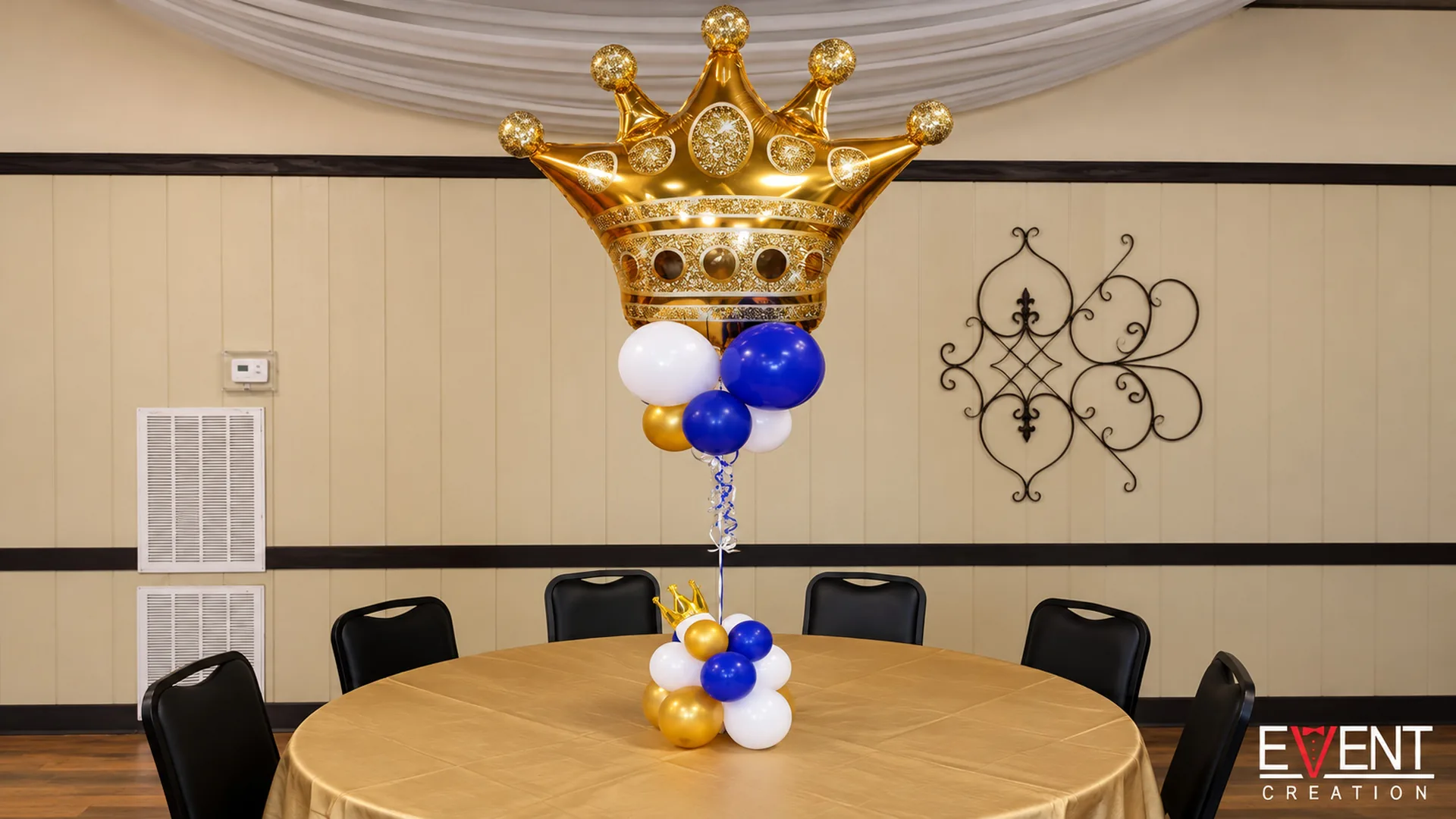
If you choose a taller appearance, review the entire silhouette, including the base, ribbons or supporting elements. The space between those parts can be as important as the balloons themselves. A design should feel coherent from the table surface upward rather than looking like separate pieces stacked without a clear relationship.
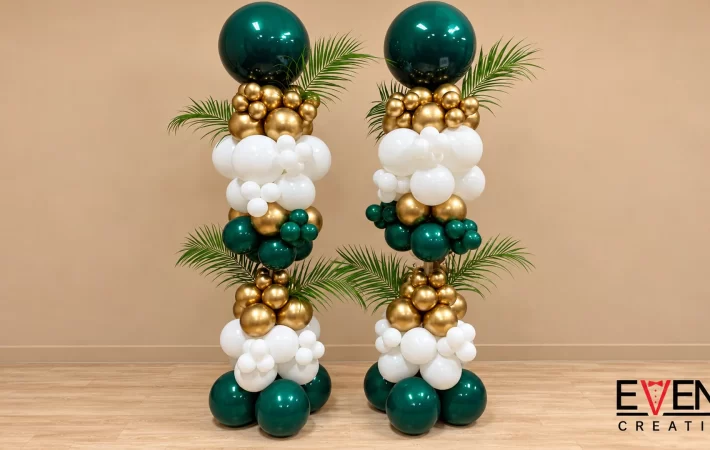
Event Creation’s balloon centrepiece service includes different approaches, from simple helium groupings to jumbo and organic designs. Discuss the visual effect you want and ask which proposed arrangement suits the table. Confirm the specific materials and proportions instead of assuming every style has the same footprint.
Use colour as a connection across the room
Table centrepieces can repeat the main palette without repeating every colour in the backdrop. If the main installation includes three shades and a metallic accent, a table arrangement might use the lead shade and one supporting detail. That gives the room continuity while keeping the smaller piece easy to read.
Look at the linens and tableware when choosing those colours. Pale balloons against pale linens may need a distinct base or a slightly deeper supporting shade. Strongly coloured linens may call for a calmer balloon palette. The centrepiece should be considered with the full table rather than approved as an isolated object.
Choose a consistent connection for every table. It could be one repeated colour, the same finish or a shared personal detail. You can vary other elements if the event calls for it, but the repeated connection helps the room feel intentional. Without it, different tables can begin to look like unrelated arrangements.
Let table numbers and names remain readable
Table numbers perform a practical job. Guests need to find them, and staff may use them to navigate the room. Decide where they will sit before the balloon centrepieces are finalized. A number tucked behind a large balloon cluster may be attractive in a close-up yet difficult to locate from the aisle.
If the centrepiece carries a name or message, review that wording separately from the general decoration. Check the spelling, capitalisation and orientation. A personalized balloon may look different from different sides, so identify the main viewing direction and decide whether that matters for the table’s position.
Avoid asking every object to carry information. A table number, a menu, a favour label and a personalized balloon can all be useful, but they should not compete at the same visual level. Give each piece a clear role and allow the centrepiece to remain decorative where practical information is already covered.
Plan around food and beverage service
The table needs to continue working after the first photograph. Think about where water will be poured, where serving dishes will be placed and how guests will reach items. A centrepiece should not force staff to move the decoration repeatedly or make guests rearrange the table before eating.
Share the service plan with the decorator and the venue contact. If the meal format changes, review the centrepiece placement again. Moving from plated service to shared dishes, for example, changes the amount of central table space that is useful. The decoration may not need to change completely, but its size or position may need adjustment.
Keep hanging details and ribbons within the agreed composition. Their movement and length should be considered beside glassware, food and people’s hands. Ask the responsible decorator to manage the final arrangement rather than leaving guests to shorten or reposition elements themselves during the event.
Choose a different approach for cocktail tables
A cocktail table is often used by standing guests who place drinks, small plates or personal items on the surface. Its centrepiece should leave enough room for those uses. A broad base can consume more of the table than expected, even if the balloons above it feel light.
Review the piece from a standing position. The line of sight is different from a seated dining table, and guests may gather close to the arrangement from several sides. Consider whether the decoration encourages people to use the table or makes it feel like a display that should be left untouched.
A smaller arrangement can still carry the event palette effectively. It does not need the same fullness as the main dining centrepieces. Let the table’s role lead the design, then repeat a colour or finish to connect it with the rest of the room. Consistency is more useful than identical scale everywhere.
Separate display tables from guest tables
A cake, gift or welcome table is viewed differently from a table where guests will sit and eat. Its balloon decoration can frame a focal object or create a more directional composition. That flexibility does not mean every available surface should be filled. The display still needs room for its main purpose.
For a cake table, identify where the cake will sit and which view matters most. For a gift table, leave usable space as items arrive. For a welcome table, keep information and any required materials easy to reach. The balloons should support those tasks rather than becoming the only thing the table can hold.
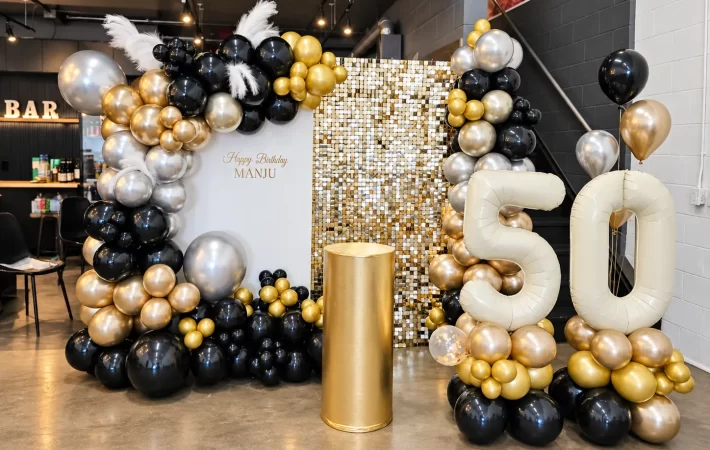
If you want larger balloon work around a display, consider how it relates to the main balloon backdrop. A small table arrangement can connect the foreground to the background. It does not need to duplicate the full garland or introduce a separate palette.
Make repetition feel intentional
When several tables use balloon centrepieces, the repetition becomes part of the room’s design. Decide what remains identical and what can vary. The same base, lead colour or overall height can create order, while subtle variation in smaller details can keep the room from feeling overly rigid.
Variation should have a reason. Alternating two arrangements may suit a planned layout, but random differences can look like inconsistent supply. If you want variation, describe the pattern and ask how it will read from the main entrance or photo position. The decorator can help identify which elements should remain steady.
Count every table that needs a piece, including any head table, children’s table or separate display. Do not assume the guest-table count covers the full event. A clear inventory helps the design remain consistent and gives the quote a specific scope without relying on a vague request for centrepieces throughout the room.
Connect balloons with other table details
Balloons can share a table with flowers, candles or printed details, but the relationship needs thought. Choose which element should provide height, which should provide colour and which should carry information. If every item tries to be the main feature, the table can become crowded even when each piece is attractive.
Where flowers are part of the plan, discuss the complete arrangement with the relevant decorator. The table setup and centrepiece service offers a place to consider those elements together. Confirm the specific proposal rather than assuming that a balloon centrepiece automatically includes additional table styling.
If candles or other venue-sensitive details are involved, ask the venue and supplier to confirm what is permitted and appropriate. Keep the design conversation focused on the desired appearance while leaving practical placement and approved use to the responsible people. A coherent table should be comfortable to use as well as attractive to photograph.
Review a sample table, not just a product photo
A product photo helps you understand the centrepiece itself. A sample table helps you understand the relationship between the centrepiece and the event. When possible, review the proposed piece alongside the selected linen colour, table number and a representative place setting.
If a physical sample is not part of the process, use a simple visual comparison. Put the relevant reference images together and label the table dimensions and guest count. Be clear that this is a planning aid rather than a promise of exact scale. The purpose is to surface questions before the event day.
During the review, look for three things: clear conversation space, enough usable surface and a visible connection to the wider palette. If one of those is missing, identify the specific change needed. Reducing the base, simplifying the colours or shifting the arrangement can sometimes solve the problem without abandoning the idea.
Confirm placement and the end of the event
Agree who will place the centrepieces and who should approve their positions before guests arrive. If table locations change during setup, the decoration plan may need to follow the new arrangement. A named contact can resolve those decisions without leaving several people to move pieces independently.
Also confirm which components are rentals and which, if any, guests may take home. Event Creation’s service information distinguishes between balloon pieces and rental structures, and the exact arrangement should be clear in your quote. Do not assume that a decorative base, stand or other supporting item is a guest favour.
If centrepieces will be removed before another activity, include that change in the event plan. Decide who is responsible and where the pieces will go. A clear end-of-use plan protects the appearance of the room and avoids a last-minute pile of decorations beside an exit or service area.
Check the room after the tables are placed
Once the tables are in their final positions, view the centrepieces as a group. A design that works well on one table can create an unexpected visual barrier when repeated across several rows. Look from the entrance, the main speaking position and any important photo angle, then ask the decorator to review anything that feels crowded.
This is not a reason for guests or hosts to rebuild the arrangements themselves. It is a reason to include a final visual check in the setup conversation. Small placement adjustments can help the room read more clearly while keeping the approved design intact. The responsible decorator can make those changes with the complete installation in mind.
Also check that the table numbers remain visible after every centrepiece is in place. A clear route through the room depends on several details working together, including furniture, signs and service access. Balloon centrepieces should contribute to the welcoming appearance without making those practical details harder to find. A final review from the guest’s perspective is a useful way to catch issues that an isolated product photograph cannot show.
A practical centrepiece brief
Send the decorator the table shape, dimensions, number of seats, service style, linen colour and any required table items. Add the event palette and explain whether the centrepieces should feel quiet, playful or prominent. Include the number of pieces and identify any tables that need a different treatment.
Then state your priorities in order. For example, conversation space might come first, followed by a connection to the main backdrop and a small personalized detail. This gives the decorator a way to make sensible recommendations if the first inspiration image is not suited to the actual table.
To plan balloon centrepieces with Event Creation, share your event details and table information. The team can recommend arrangements that suit the setting and confirm the design, quantities, delivery and setup scope in writing. A well-planned centrepiece should make the table feel ready for guests, with the decoration and the gathering working comfortably together.
Planning your own event? Share the date, venue and the look you want. We will contact you within 24 hours to talk through design ideas and pricing.