How to Style Balloon Bouquets as Part of Your Event Decor
A balloon bouquet can be a personal gift, a small event accent or one part of a larger decoration plan. The difference lies in how it is composed and placed. A bouquet chosen for a doorstep surprise may need a clear message and a self-contained shape. A bouquet beside a backdrop may need to repeat the palette quietly and leave the main installation in charge.
Thinking about that role before choosing individual balloons helps the finished piece feel intentional. You can then decide which balloon should lead, how the smaller balloons should support it and how the bouquet should relate to the room. This guide explains those decisions so a bouquet becomes a considered part of the event, rather than an unrelated cluster added at the end.
Decide whether the bouquet is a gift or an event piece
A gift bouquet should communicate its message even when it is separated from the rest of the celebration. The recipient may see it at a doorway, desk or home before any other decoration is present. Its colour, shape and personal detail need to form a complete idea on their own.
An event bouquet can rely on the surrounding design for context. It might repeat a colour from the main garland, mark a gift table or provide a smaller accent near a welcome area. It does not need to explain the whole occasion again if a large sign or backdrop already does that work.
Tell the decorator which role you need. If the bouquet will begin as a gift and later join the event, explain both uses. The design can then be considered for the main moment rather than assumed to perform every possible role equally well. A clear purpose makes the remaining choices more straightforward.
Choose one focal balloon
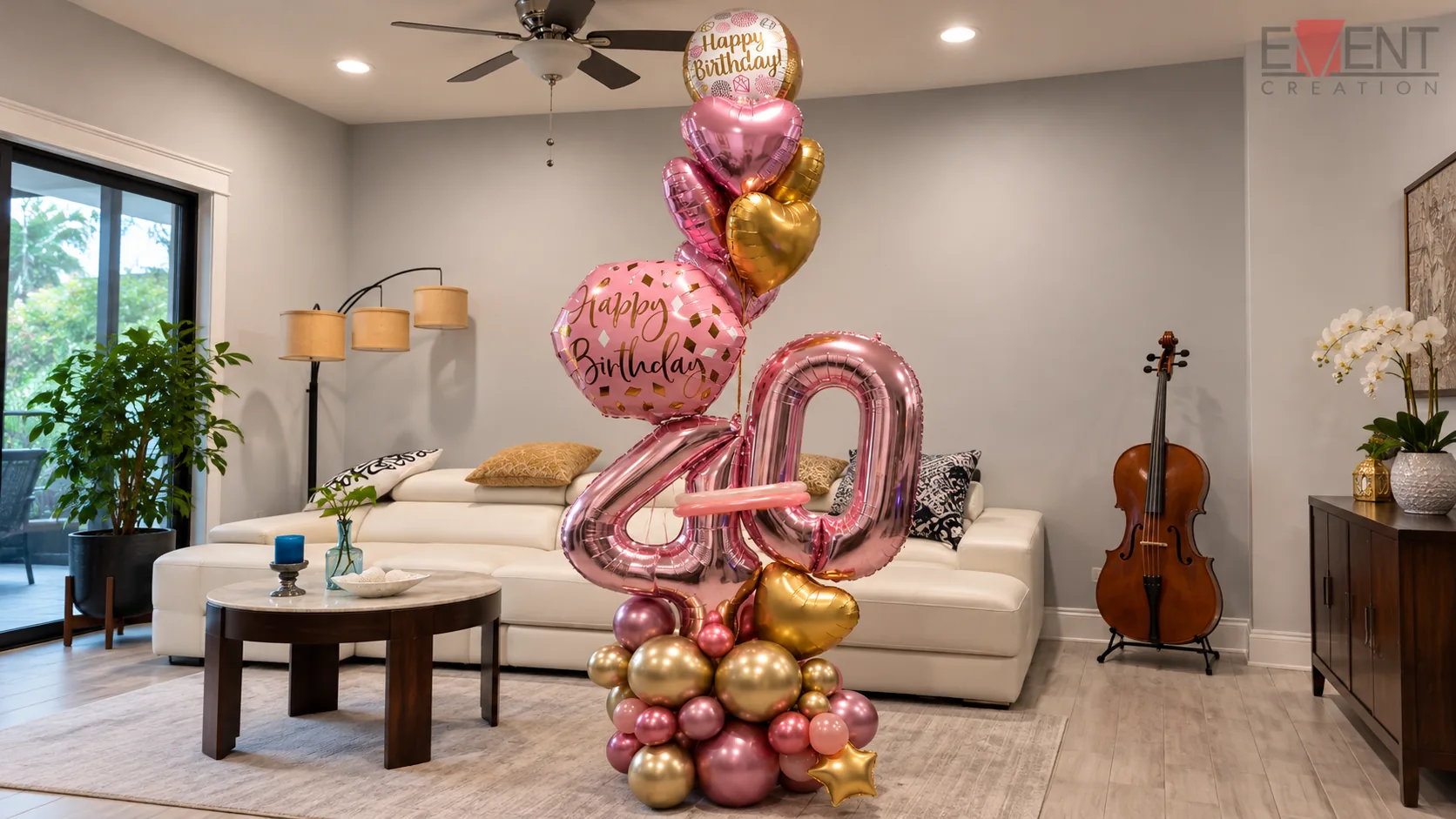
A bouquet is easier to read when one element has a clear lead. That might be a larger balloon, a personalized message, a foil number or a recognizable shape. The supporting balloons can create fullness and colour around it without competing for the same attention.
Ask what you want someone to notice first. If the answer is the recipient’s name, the wording needs a clear position and enough visual separation. If the answer is a number, the outline should remain recognizable. If the palette is the main feature, a simpler focal balloon may be appropriate.
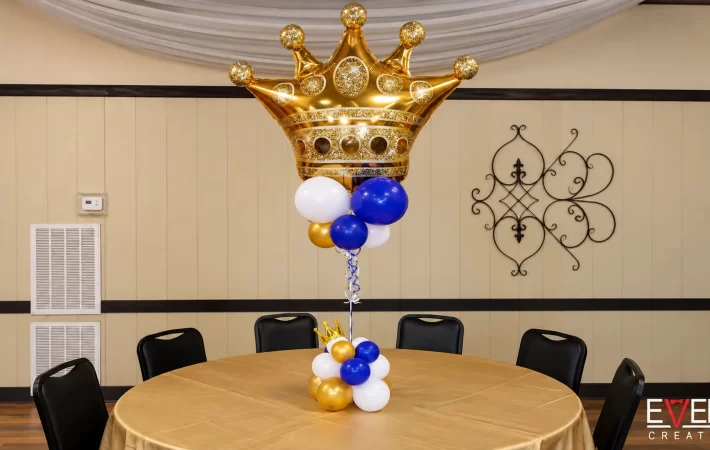
Event Creation’s balloon bouquet service includes helium and air-filled options with jumbo, confetti and foil balloons. Discuss the specific focal element you want and confirm the proposed materials. Different balloon types contribute different shapes and should not be treated as interchangeable additions.
Build a supporting group with a clear relationship
Supporting balloons should make the focal element feel connected to the bouquet. They can repeat its colour, provide a quieter background or create a shape around it. If every supporting balloon introduces a new colour or message, the bouquet can become difficult to understand quickly.
Choose a small set of relationships. Perhaps the main balloon carries the personal message, two supporting colours connect to the event palette and a reflective accent repeats a detail from the invitation. This is a design direction rather than a fixed formula. The exact arrangement should suit the selected bouquet.
Review the supporting group without the focal balloon. It should still feel coherent, even though it no longer carries the complete message. Then put the focal element back into the concept and check that it remains the clear lead. This helps avoid a bouquet in which the personal detail gets lost inside the fullness.
Create a readable silhouette
The bouquet’s outline matters from a distance. A compact grouping, an upward arrangement and a more spread-out shape each create a different impression. Decide which character suits the placement and purpose before concentrating on small decorative details.
Look at where the widest part of the bouquet sits. If it is intended beside a desk or display, that width affects how it relates visually to the object next to it. A tall narrow form may feel different from a broad cluster even when the colours are identical.
Share an image of the proposed placement rather than only a close-up of another bouquet. The decorator can then explain whether the desired shape suits the available setting. Keep the discussion focused on the finished appearance while leaving the suitable support and arrangement method to the responsible team.
Use colour to connect the bouquet to the event
If the bouquet is part of a larger event, choose which colours it should repeat. It does not need to include every shade from the main installation. One lead colour and one supporting detail may be enough to establish the relationship, especially when the bouquet is relatively small.
Consider the background where it will stand. A pale bouquet can disappear against a similarly pale surface if there is little definition. A strong colour can become very prominent in a quiet area. Decide whether you want the bouquet to be an obvious marker or a subtle part of the room.
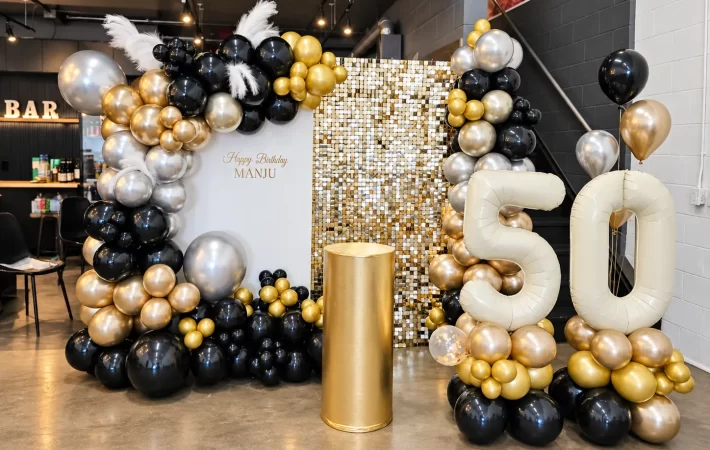
For a larger balloon decoration plan, review the bouquet alongside the garland, columns or backdrop. Repetition should feel deliberate. A new metallic finish or an unrelated accent colour can make a small bouquet appear disconnected even when it is attractive on its own.
Personalize the message without crowding it
A name, number or short message can make a bouquet feel specific to the recipient. The wording should be chosen for the available space and the intended viewing distance. A long message that requires close inspection may not communicate as clearly as a short phrase with a strong position.
Confirm the exact text in writing. Check spelling, punctuation, capitalisation and any preferred form of the recipient’s name. If the design includes a date or number, review those separately. These details should not be inferred from an invitation photograph when you can provide them clearly.
Ask how the personal detail will face within the arrangement. A bouquet may be seen from different directions, but the main message often has a preferred view. Identify that view and place the bouquet accordingly. Clear wording is only useful if it is visible from where people are likely to look.
Choose finishes that suit the focal point
Different finishes can add interest, but they should support the bouquet’s hierarchy. A reflective accent can draw attention to a foil number or connect to a sign elsewhere in the room. A quieter finish can make the personal message easier to see. A clear balloon can become a statement piece when its filling or wording has a defined role.
Avoid adding every finish simply because the bouquet is small enough to contain them. Several competing surfaces can make a compact arrangement feel busy. Choose one dominant appearance and use the other finishes with a purpose.
Review clear or reflective elements against the actual background. The effect shown in a product photograph may depend on a plain surface and particular lighting. Explain what you like about the reference, then ask which proposed materials can create a coherent result in the intended setting.
Give ribbons and lower details a deliberate role
The lower part of a bouquet affects how complete it looks. Ribbons, ties and the visible base should relate to the colour palette and the overall shape. They should not feel like an unrelated afterthought beneath the main balloon grouping.
Decide whether those details should be noticeable or quiet. A strong ribbon colour can become part of the design, while a more restrained treatment can keep attention on the balloons. The appropriate choice depends on the bouquet’s role and what will sit nearby.
Ask the decorator to confirm the intended arrangement rather than making assumptions from a cropped photograph. The lower details may be hidden in the reference image but visible at your event. A complete description helps you understand the full piece, including any base or supporting component involved.
Place the bouquet where its role makes sense
A bouquet marking a gift table should sit where it helps identify that area without consuming the surface needed for gifts. A bouquet beside a welcome display should support the sign rather than cover it. A bouquet at a desk should be considered alongside the everyday objects that remain in use.
Take a photograph of the area and mark the intended position. Include nearby doors, furniture and signs so the decorator can understand the context. The goal is to find a position where the bouquet feels connected and visible while respecting how the area will be used.
Avoid treating a bouquet as a universal solution for an empty corner. If the corner has no role in the event, adding a cluster may not improve the room. It can be more effective to strengthen a meaningful area that guests will actually use or photograph.
Use several bouquets as a planned group
When you want more than one bouquet, decide how they relate. They might repeat an identical design, vary in size while sharing a palette or carry different personal details within one consistent style. The relationship should be clear enough that the group feels intentional.
Map their roles before choosing the quantities. One could mark a welcome area, another a gift table and another a secondary display. Each position may need a different scale, so identical bouquets are not automatically the best choice. Consistency can come from colour and finish rather than exact dimensions.
Also consider how the bouquets will be seen together. If several appear in the same photograph, too many focal balloons can compete. If they occupy separate areas, repeating a recognizable detail can help connect the room. The viewing relationship should guide how much variation is useful.
Distinguish bouquets from table centrepieces
A bouquet and a centrepiece can share materials, but they are selected for different uses. A bouquet may be designed as a gift or floor-level accent. A dining-table piece needs to account for conversation, place settings and service. Do not assume that an attractive bouquet can be placed on every table without reconsidering its proportions.
If the piece will sit on a guest table, share the table shape, number of seats and service style. The decorator can recommend whether the bouquet concept should be adapted or whether a dedicated balloon centrepiece is more appropriate.
This distinction also helps the event look more coherent. Table decorations can remain quieter while the bouquet carries a larger personal message elsewhere. Every area does not need the same intensity. Giving each type of decoration a clear job makes the complete room easier to understand.
Plan the arrival around the main moment
The delivery plan should reflect when and where the bouquet needs to be seen. A surprise gift has a different handoff from an event piece being installed with other decorations. Give the team the correct recipient or on-site contact and explain the moment the bouquet is meant to support.
For helium elements, ask the decorator about timing and care for the specific selection. Balloon behaviour varies with the material and conditions, so avoid treating a general duration as a promise for every bouquet. The practical goal is to have the arrangement looking appropriate for the main moment.
Confirm any delivery or setup scope in the written quote. Event Creation’s website distinguishes between bouquet delivery and larger installed arrangements. The service included with one type of order should not be assumed to apply automatically to another. A clear handoff plan protects both the surprise and the event schedule.
Decide what happens after the first use
If the bouquet will move from one location to another, discuss that plan before ordering. A piece chosen for one setting may need a different arrangement or handoff to suit another. Do not assume that every component is intended to be moved or separated by guests.
Ask which elements are part of the gift and whether any supporting pieces belong to a rental arrangement. That distinction should be clear before someone takes the bouquet home. The exact answer depends on the selected design, so confirm it rather than relying on the appearance of the piece.
If the bouquet stays at the event, decide who is responsible for it at the end. This is a small operational detail, but it prevents the decoration from becoming an unresolved item during cleanup. The design should have a clear beginning, main use and final destination.
Compare three bouquet directions
For a personal gift, you might choose a clear focal message with a compact supporting palette. The arrangement would need to feel complete on its own, so the name or number would have a strong role. The surrounding balloons would reinforce the recipient’s preferred colours without adding unrelated symbols.
For a welcome area, you might choose a simpler bouquet that repeats the main event palette and leaves the sign in charge. Its role would be to make the area feel connected to the celebration. A large additional message could be unnecessary because the welcome sign already communicates the purpose.
For a secondary display, you might use a quieter bouquet with one repeated accent from the main backdrop. This would create continuity without building another competing focal point. These are hypothetical directions, but they show why the same balloon selection should not be copied automatically into every location.
Choose the direction that matches the actual use, then refine the details. A useful bouquet is not defined by how many different balloons it contains. It is defined by how clearly the pieces work together and how naturally the arrangement belongs in its setting.
Take one final look at the whole arrangement
Before the bouquet is handed over or placed in its event position, review the main view as a complete picture. Check that the personal message faces the intended direction, the focal shape is visible and the supporting colours look connected. Include the base and lower details in this review rather than judging only the upper cluster.
If the bouquet appears beside a sign, step back far enough to see both. The wording on one should not become hidden behind the other. Ask the responsible team to adjust the placement if necessary. A small change in position can make the bouquet feel integrated with the display while preserving its own clear shape and message.
Give the decorator a complete bouquet brief
Share the occasion, recipient or event role, preferred palette, exact wording and proposed location. Include a photograph of the area if the bouquet will be part of an event. State whether it should be the main feature or a supporting accent, and identify any materials or colours you want excluded.
If the bouquet needs to coordinate with a backdrop or other balloon work, provide the approved references rather than an early idea that has since changed. One current brief helps the team keep the palette and personal details consistent. Confirm any substitutions that would affect the focal element.
To plan a balloon bouquet with Event Creation, send your date, location and design preferences. Explain how the bouquet will be used and what you want it to communicate. The team can recommend a suitable arrangement and confirm the design and delivery details for your occasion.
Planning your own event? Share the date, venue and the look you want. We will contact you within 24 hours to talk through design ideas and pricing.