Hotel Ballroom Load-In: A Host’s Planning Checklist
Hotel ballroom setup depends on a chain of handoffs. The room must be released, the delivery route must be available, furniture needs to reach the agreed stage and each supplier needs to know where and when to work. A host does not need to manage every technical detail, but the event needs one clear plan that connects those responsibilities.
Event Creation’s venue guidance highlights access windows, loading docks, freight elevators and hotel requirements as important parts of ballroom decoration planning. The details vary by hotel and booking, so this checklist is a framework for asking the right questions and recording the confirmed answers. It is not a substitute for the hotel’s instructions or the decorator’s installation plan.
1. Identify the exact room and booking arrangement
Begin with the ballroom name, the event date and the areas included in the booking. A hotel may have several function rooms and shared spaces, so the venue name alone is not enough for a delivery brief. Confirm which foyer, preparation area or adjacent room is actually available to your event.
Ask whether the ballroom is being used before or after your booking and how that affects access. Do not assume an empty-looking room is available early. The confirmed release time should come from the hotel contact responsible for your event.
Keep the booking arrangement connected to the decor scope. A display planned for a foyer needs that foyer to be part of the approved arrangement. A photo area outside the ballroom should not be treated as available simply because guests will pass through it. The exact space needs to be agreed before the installation is finalized.
2. Name the people responsible for each handoff
Record the main hotel event contact, the decor lead and the person coordinating the overall event. If loading access is handled by a different hotel department, include that contact as well. The goal is to know who can resolve each practical question without sending every issue back to the host.
Clarify who has authority to approve a placement change during setup. That person should understand the current layout and the event’s priorities. Several people giving conflicting instructions can slow the installation and create a result that differs from the agreed design.
Share the current contact list with the suppliers who need it. Keep personal details limited to the people involved in the work, and update the list if responsibilities change. A correct name and reachable contact can be more useful on setup day than a long document with unclear ownership.
3. Confirm the delivery entrance and route
Ask the hotel where suppliers should arrive and which route leads to the ballroom. Confirm the loading point, the relevant doors and any freight elevator arrangement. The decorator needs the actual delivery instructions rather than the public guest entrance address alone.
Find out whether a loading slot must be reserved and who makes that reservation. If the route is shared with other suppliers or events, ask how arrivals should be coordinated. Do not assume that all deliveries can arrive at the same time and wait in the same place.
Share any route information that could affect the selected pieces, including relevant doorways, turns or changes in level. The decorator should assess what is appropriate to deliver and how. The host’s role is to ensure the information is available and confirmed, rather than improvising a route when the team arrives.
4. Distinguish room release from installation completion
Record when the room is available to decorators, when the decor must be ready and when guests begin arriving. Those are separate milestones. A useful setup plan gives the team a realistic working window rather than treating the guest start time as the only deadline.
Ask the hotel what condition the room will be in at release. It may be empty, partly furnished or ready for decorative placement, depending on the booking and service arrangement. The decorator needs to know which tasks will already be complete and which will happen alongside the installation.
Event Creation’s event planning service includes timeline and vendor coordination within the agreed scope. If several suppliers are involved, a coordinated sequence can connect these milestones so each team understands what needs to happen before its work begins.
5. Confirm the current furniture layout
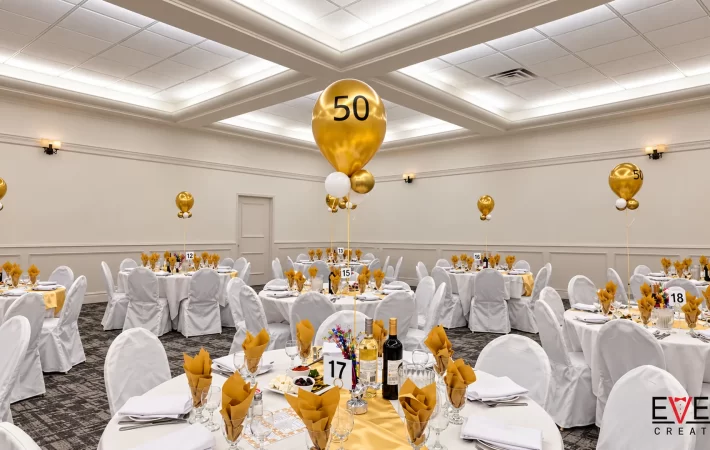
Use one current layout showing guest tables, the stage or main presentation area, the dance floor, the photo position and any display tables. The decorator should not be working from an earlier version while the hotel uses a revised seating plan.
Ask who places tables, chairs and linens, and when those tasks will reach the stage needed for decor. A backdrop installation may happen before some furniture is positioned, while table centrepieces may need to wait until the tables are dressed. The appropriate order should be agreed by the responsible teams.
If the guest count changes, review the impact on the decor areas. Adding a table can affect the space in front of a backdrop or the route to a stage. The change should be considered as a layout decision, not only a catering update.
6. Separate the major decor zones
Identify the main installation areas and describe the role of each one. The stage, entrance, guest tables, photo area and any special display may all need decoration, but they should have clear boundaries and priorities. This helps suppliers understand where their work belongs.
For each area, note the selected pieces and any item supplied by another vendor. A cake, sign, screen or personal object can affect the decor composition even when it is not part of the decoration order. Its placement and arrival should be coordinated with the relevant team.
The stage decoration service is one example of a zone that needs to be considered with the surrounding event plan. The backdrop, presentation equipment and people using the stage should form one coherent arrangement rather than independent installations competing for the same area.
7. Review the hotel’s decoration requirements
Ask the hotel about the specific elements in the proposed design, including wall attachments, ceiling work, helium, candles and any effects. Requirements can differ by room and booking. Use the hotel’s current instructions rather than assuming a previous event establishes what is allowed.
Share those instructions with the decorator early enough for the design to be adjusted if needed. The decorator should propose suitable methods and materials for the approved setting. The host should not be left to decide installation techniques on the day.
Event Creation’s venue guidance explains that the room’s access, height, power and rules affect what is built and when. Treat those conditions as part of the design process, not paperwork to be addressed after every decorative piece has already been selected.
8. Ask about required vendor information
The hotel may request particular vendor documents or details for your booking. Ask what is required, when it is due and where it should be sent. Do not assume every hotel asks for the same information or uses the same approval process.
If a certificate of insurance or other document is requested, pass the exact requirement to the relevant supplier, including any wording the hotel specifies. The supplier and hotel should resolve the document details through their normal process. The host can track whether the requirement has been completed without interpreting it independently.
Keep the status clear. “Requested,” “submitted” and “accepted by the hotel” are different stages. A setup plan should not rely on an unresolved requirement being complete simply because someone has sent an email. Confirm the practical result with the responsible contact.
9. Coordinate decor with AV and lighting
Screens, speakers, lighting and other event equipment can affect the appearance and usable area of a decor installation. Ask the relevant teams to review their placements together. A backdrop should not be approved without understanding what equipment or presentation content will sit beside it.
Confirm who is responsible for each selected item. The hotel’s AV team may have a role, another supplier may be involved or the event planning scope may include coordination. The exact arrangement should be recorded so no one assumes another team will provide or position something.
Share the decor palette and important visual details with the lighting lead where relevant. The goal is a coherent setting for the event and photographs. Technical requirements and approved installation methods should be handled by the responsible professionals, with the host keeping the overall priorities clear.
10. Plan the order of supplier arrivals
A useful arrival schedule reflects dependencies. Large installation pieces may need a clear area before tables are fully dressed. Flowers or personal display items may arrive later. The exact sequence depends on the event, but it should be planned rather than left to whoever reaches the dock first.
Ask each supplier what access and room conditions they need. The coordinator can then build a sequence that fits the hotel’s confirmed window. Avoid assigning precise arrival times without checking whether the required preceding work can actually be completed.
Keep the schedule current and distribute changes to the people affected. A revised delivery time is not helpful if only the host knows about it. The plan should connect the hotel, decor team and other suppliers around one agreed sequence.
11. Identify a place for working materials
Ask the hotel where suppliers may temporarily place packaging, cases or materials during setup. Do not assume a corridor, foyer or neighbouring room is available for storage. The approved working area should be identified before arrivals begin.
The decor team can explain what space is needed for its selected installation. Other suppliers may have different requirements, so the coordinator should avoid assigning the same limited area to everyone. A clear temporary arrangement helps the ballroom remain organized while several tasks are underway.
Also confirm when those materials must be cleared from guest-facing areas. The installation may be visually complete before the room is fully ready for arrivals. The final preparation sequence should include the removal of working items as well as the placement of decoration.
12. Make the photo area part of the layout
A photo backdrop needs space for people and a viewing position, not only a place against the wall. Mark those areas on the layout and consider how guests will approach and leave them. A backdrop squeezed into leftover space may be difficult to use even if the decorative surface fits.
Review any foreground tables, plinths or number displays with the photographer or the person responsible for the main photo plan, where appropriate. The arrangement should support the expected photographs rather than blocking the standing area unintentionally.
The backdrop rental options can be selected in relation to this use. A display behind a cake table and an open group-photo backdrop are different arrangements. Make the intended role clear before the team finalizes the design.
13. Establish how changes are handled
Setup can reveal a practical issue that was not apparent in the planning images. Decide who should be contacted and what information they need to make a decision. The decorator should not receive competing instructions from several people who have different versions of the plan.
Protect the event’s main priorities when considering an adjustment. The central message, stage view or main photo area may matter more than a secondary accent. A clear priority order helps the coordinator resolve a change without losing the purpose of the design.
Record any change that affects another supplier or the hotel’s operation and communicate it promptly. Moving a display can affect lighting, service or the guest route. A local adjustment should be considered in relation to the whole room rather than treated as an isolated decoration decision.
14. Schedule a room-readiness review
Before guest arrival, the appropriate hotel contact and event lead should review the completed room. Confirm that the decor is in the agreed locations, the main signs are visible and the layout matches the current event plan. The responsible suppliers should address any concern involving their installations.
Check the room from the entrance, the main guest positions and the photo area. These views can reveal an obscured sign or an awkward overlap that was not obvious during installation. The review should focus on whether the room is ready to function as intended.
Do not use the final review to introduce an entirely new design direction. Its purpose is to confirm readiness and resolve practical issues. Major aesthetic decisions should already be settled so the team can complete the room within the agreed window.
15. Confirm the removal plan in advance
Record when decor must be removed, how the team regains access and whether the delivery route changes after the event. The ballroom may need to be prepared for another booking, so the removal arrangement should be confirmed with the hotel rather than assumed.
The written decor quote should identify which items are collected and which tasks are included. Event Creation’s service inclusions vary by item and booking. Confirm the actual scope, especially where late-night or next-day collection is involved.
Identify personal items that must be returned to the host and keep them distinct from rentals. A clear end-of-event handoff prevents signs, gifts or other keepsakes from being mixed with supplier equipment while the room is being cleared.
16. Agree what happens if access changes
Ask the coordinator and decor lead how they should respond if the ballroom is released later than confirmed or the delivery route becomes temporarily unavailable. The answer should come from the responsible teams and the hotel’s actual arrangements. Do not assume the same installation can simply be compressed into any shorter window.
Keep the main priorities visible in that conversation. The stage backdrop, essential signage and a principal photo area may have different importance from optional accents. If an adjustment becomes necessary, the team needs to know what the event depends on and which details have more flexibility.
The host should also know who will communicate the revised plan. A delay at the loading point may affect several suppliers, so individual teams should not each receive a different account of the situation. One coordinated update helps preserve the sequence and avoids sending more deliveries into an area that is not ready.
This preparation is about clear responsibility rather than predicting every possible problem. A confirmed contact, a priority order and an agreed communication route give the team a practical way to respond if the conditions change. They also keep the host from becoming the only person holding all the relevant information.
Bring the checklist into one current brief
The final brief should contain the exact room, confirmed access window, delivery route, current layout, responsible contacts and agreed removal plan. Attach the hotel’s relevant instructions and identify any unresolved item clearly. The team should be able to distinguish a confirmed arrangement from a question still awaiting an answer.
To coordinate ballroom decor with Event Creation, send your hotel booking details and event priorities. The team can recommend the decoration and clarify the installation scope. A successful load-in gives the design a practical path into the room, with each handoff understood before the first delivery arrives.
Planning your own event? Share the date, venue and the look you want. We will contact you within 24 hours to talk through design ideas and pricing.