Wedding Photo Booth Toronto: What to Plan For
Updated
A wedding photo booth Toronto couples get real use out of is usually booked for two or three hours after dinner service ends, placed well away from the speeches, and mentioned to the photographer before the day. Run that way, it covers the stretch between the first dance and the exit, when guests are up and moving. Run for the whole reception, it stands empty through the ceremony and most of the meal.
A wedding is not a party with a booth dropped into it. There is a ceremony, a receiving line, a seated dinner, speeches, a first dance and an exit, and each of those either sends guests toward the booth or pulls them away from it. What follows runs in that order, because the running order decides your hours, your placement and whether the queue causes a problem.
How a wedding photo booth in Toronto fits the running order
Map the evening in blocks before you look at packages. Guests arrive, the ceremony runs, there is a cocktail hour or a receiving line, dinner is served in courses, speeches land between or after courses, then the first dance opens the floor, and an hour or two later people begin to leave. A booth is only useful in the blocks where guests are standing, holding a drink and free to wander. That is the cocktail hour and everything after the first dance.
In practice most couples choose between two windows. The first is a short cocktail-hour run, which works when the ceremony is offsite and guests arrive with time to fill. The second, and the one we recommend more often, is the post-dinner window: the booth opens as the dance floor does and closes before the last hour, so guests find it while the room is still full. Decide which window you want, then buy hours to match it.
Hours: where couples spend money they do not need to spend
Booth hours are the easiest line on a wedding budget to over-buy. A booth cannot work during a seated dinner because nobody leaves the table, and it cannot work during a ceremony at all. If you book from cocktail hour to last call, you are paying for two hours of an attendant watching an empty platform while the mains go out. Our website-listed starting prices for the 360 video booth are $400 for two hours, $500 for three and $600 for four, with additional hours from $150, and final pricing depends on location, timing, size and customization.
Three hours is the size most weddings need, and it buys a full post-dinner window with margin at either end. Two hours is enough with a firm plan: open at the first dance, close when the cake is cut. Four hours makes sense only when the reception runs long, or when you want the booth live through both the cocktail hour and the dancing, which usually means agreeing an idle period in the middle.
Placement: the mistake almost everyone makes
The most common planning error at a wedding is putting the booth within earshot of the speeches. A booth is not quiet. There is an attendant giving instructions, a group of six deciding who stands where, music from the booth itself on a 360 platform, and laughter. Put that thirty feet from a microphone and either the speeches get talked over or the booth has to be shut down for twenty minutes, which is money you already paid for.
Look for a position with a wall behind it, out of the sightline between the head table and the guest tables, and ideally around a corner or in an adjoining foyer. Guests should reach it without crossing the dance floor, and the queue should form along a wall rather than across a service route the catering staff are using. Check the floor surface too: a 360 platform needs level ground, and a raised parquet edge or a thick carpet seam is worth knowing about in advance.
Working around the photographer
Your photographer is working the room all evening and does not want a booth queue walking through their frames. Send them the booth location and the open and close times as soon as they are set, the same way you would send the timeline. Most photographers will simply plan around it, and a few will ask you to move it, which is far better heard two weeks out than on the day.
There is a second reason to tell them. A photographer who knows the booth opens at nine will often use the queue itself, since that is where guests gather voluntarily. What you are avoiding is the opposite case, where the booth sits in the one clear background they had planned to use for family groups. Coordinate it and the two work in parallel.
Prints and the guest-book version
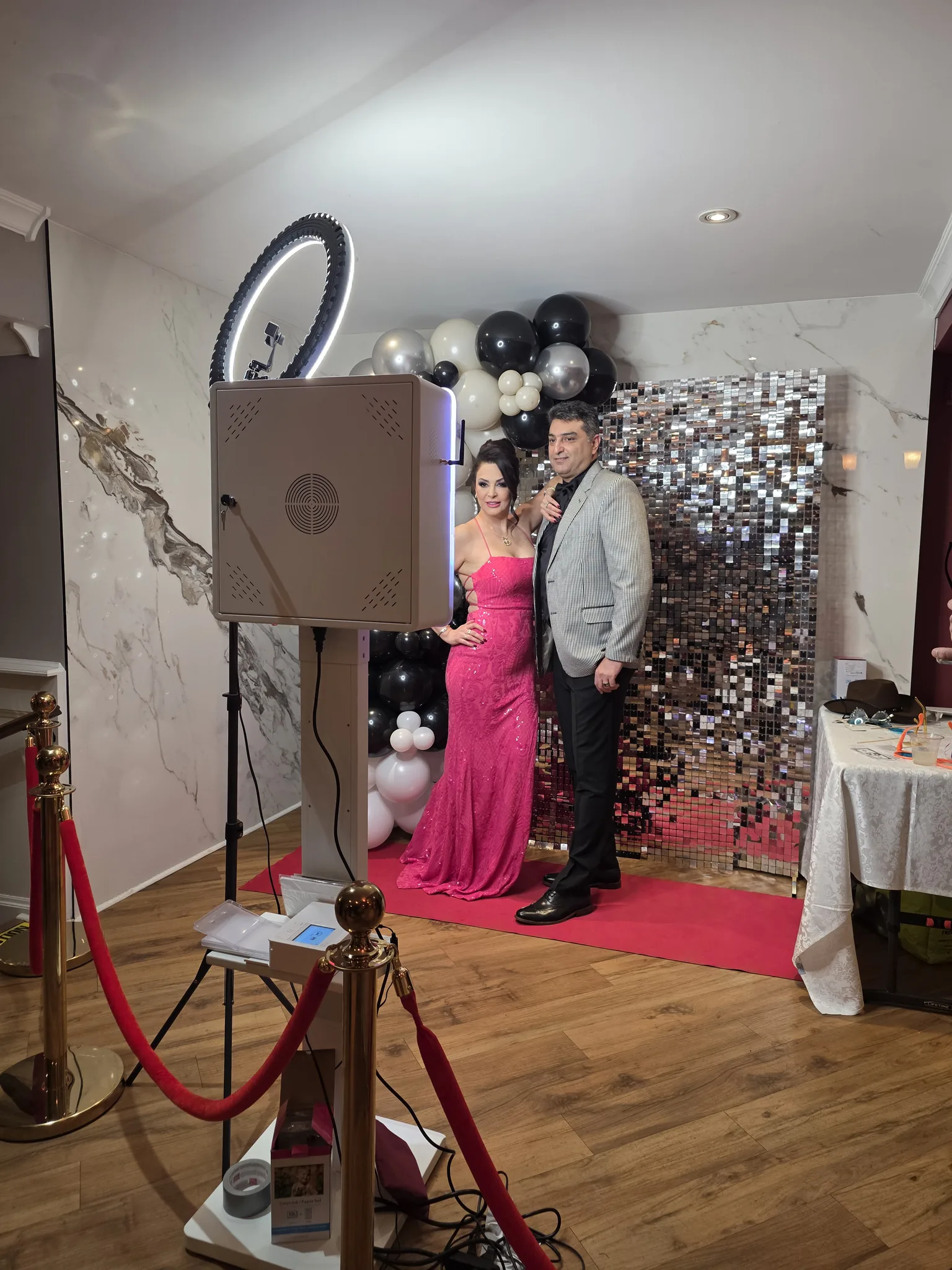
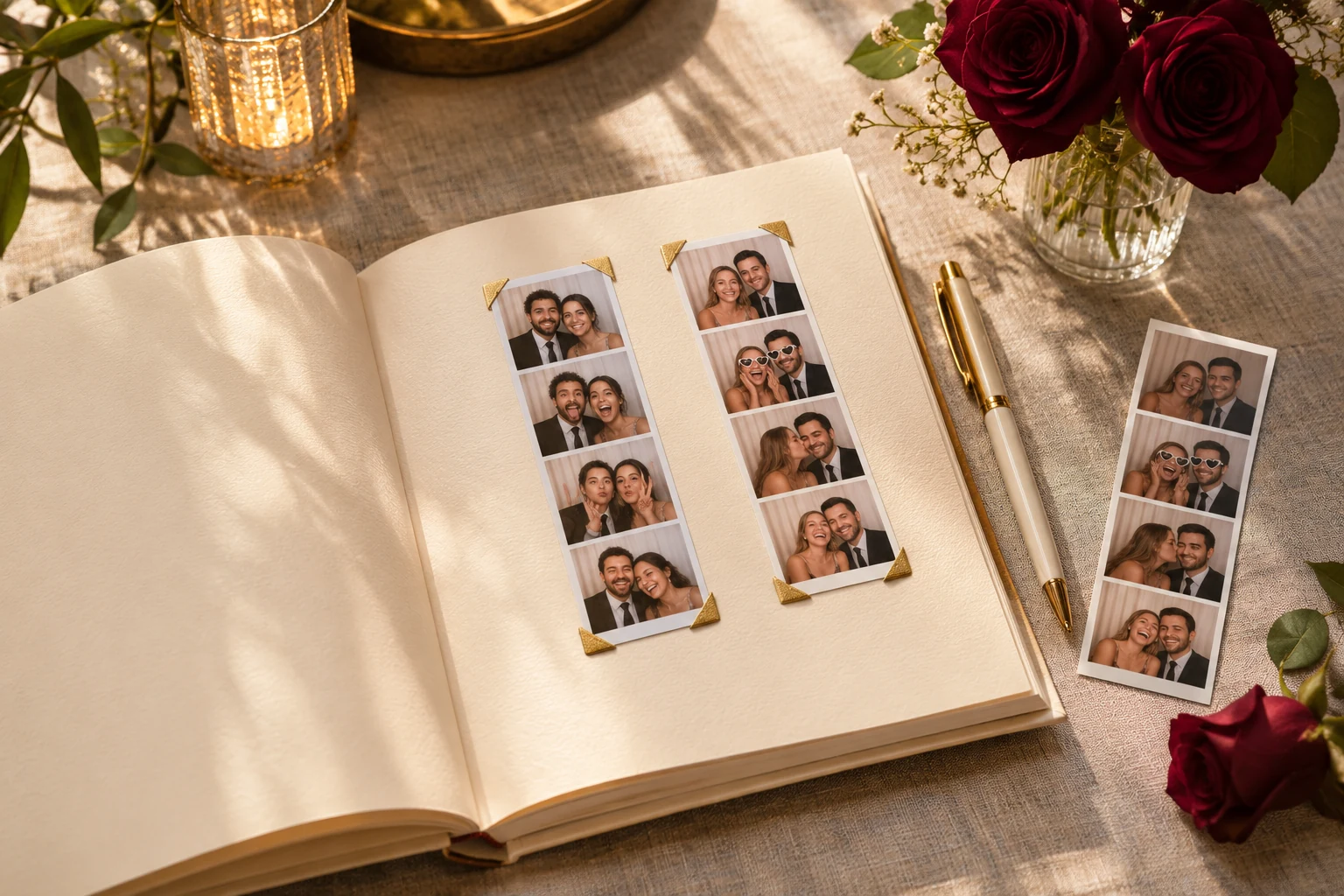
A print does something at a wedding that a video does not. It is an object a guest can leave behind, and that is what makes the guest-book version possible: the attendant takes two copies of every strip, one for the guest and one that goes into a book beside the booth with a pen and a space for a note. You finish the night with a signed book instead of a folder of files. Our classic photo booth starts at $410 for two hours and $490 for three, including a styled backdrop, delivery, setup and takedown, red carpet, stanchions, props, unlimited pictures, instant printing and instant sharing.
What’s included
- Classic photo booth: backdrop, delivery, setup and takedown, red carpet, stanchions, props, unlimited pictures, instant printing and sharing, attendant
- 360 video booth: attendant, setup and teardown, red carpet and stanchions, LED lighting, custom overlay, instant sharing, event album, unlimited sessions
Add-ons
- Each extra hour, 360 video booth added before the eventfrom $150
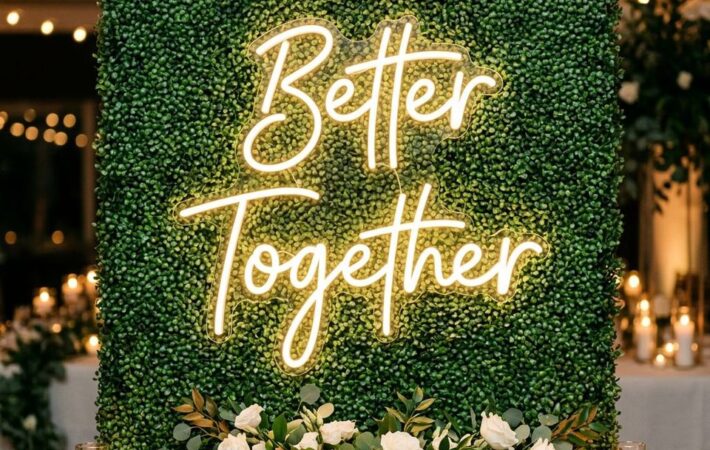
- Green wall backdrop behind the booth$90
- Flower wall backdrop behind the booth$120
- Shimmer wall backdrop behind the booth$120
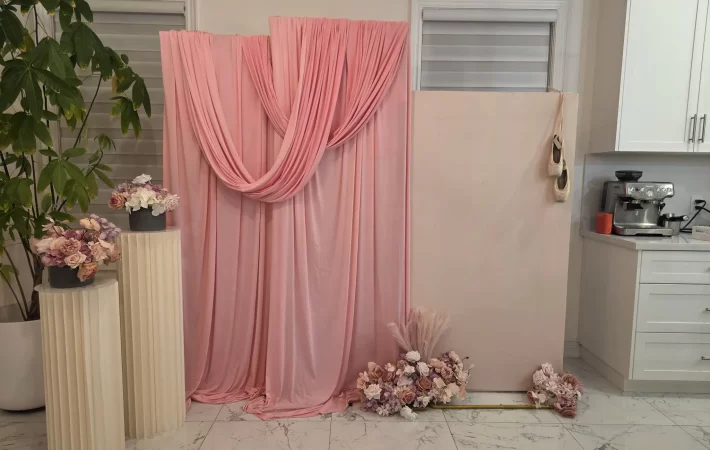
- Moon and cloud backdrop backdrop rental; delivery and installation from $85from $150
Video earns its place differently. A 360 booth produces short clips guests post that same evening, so it travels while the reception is still happening, and it handles groups of up to five on the platform. If you want both the physical keepsake and the shareable clip, the honest answer is that they are two different rentals, and the guest-book book is the reason to lean toward prints when you can only choose one.
Guests who will not use a booth unless asked
Every wedding has a table of guests, usually the older relatives, who will look at a booth all evening and never approach it. They are not uninterested. They are waiting to be invited, and they do not want to be the first ones in front of a camera or to work out the controls in public. Left alone they will go home without a photo, which is the group whose photos you will most want in ten years.
The fix is a person, not a sign. Ask the attendant to walk over to specific tables and invite people by name, and ask one cousin or bridesmaid to bring a group of four across early so the first strips are already printing when others look over. For a 360 platform, tell the attendant to offer the still-standing option rather than the spin for anyone unsteady on their feet. That one instruction changes who ends up in the gallery.
The overlay with your names and date
The custom overlay, the frame carrying your names and the date that appears on every print and clip, is the one element worth settling weeks ahead. It is included with the 360 booth, which also comes with an on-site attendant, setup and teardown, rope stanchions and red carpet, LED lighting, instant video sharing, an event album and unlimited sessions. Approving it early means you see a proof, fix the spelling of both surnames and pick a font that matches your wedding stationery.
Keep it restrained. Names, date, and at most one small graphic element already used elsewhere in the wedding. Overlays fail when they crowd the edges of the frame, because a group of five fills the shot and the text ends up sitting across somebody’s face. If you used a motif for your engagement or proposal or a monogram from earlier in the year, that is usually the right thing to reuse, and one round of proofing is enough to get it settled.
Load-in at a wedding venue that has another booking
Many Toronto and GTA halls run two bookings in a day, and the room you saw on your site visit may be hosting a lunch that finishes three hours before your guests arrive. That compresses load-in for everyone: caterer, florist, decor team and booth all want the same door and the same service elevator at the same hour. Ask your venue coordinator for the actual access time in writing, not the ceremony time, and ask whether a second event is booked that day.
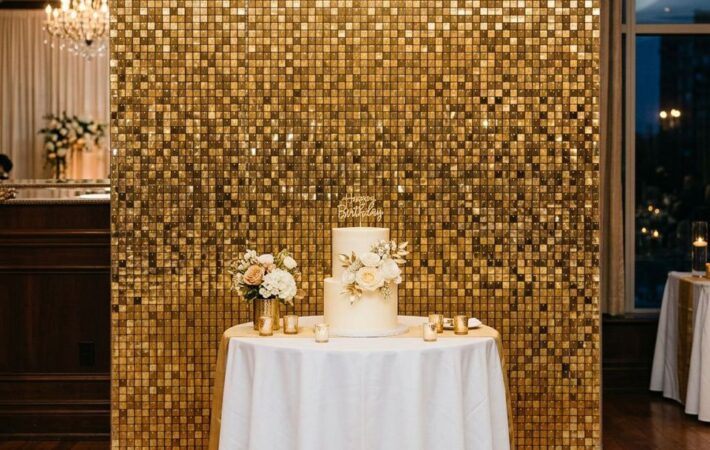
From there the details are practical. A wedding photo booth in Toronto needs a dedicated power outlet near its position, a clear route from the loading door with no stairs if possible, and thirty to forty minutes of quiet setup before guests are in the room. Elevator dimensions matter in condo party rooms. If the backdrop behind it is a rental such as a shimmer wall, from $480 for the 6.6 by 6.6 ft size as a website-listed starting price, that installs in the same window. Venue rules and our on-site team’s guidance apply to placement and rigging, and our portfolio shows how these setups sit in real rooms.
A booth is a small decision with a lot of timing attached to it, and the couples who get the most out of one placed it on the timeline before they compared prices. Send us your date, your venue and your running order, and we will tell you which window and how many hours we would book. You can reach us through our contact page, and ask us about our new-customer offer while you are there.
Frequently asked questions
How many hours of photo booth do I need for a wedding?
Three hours suits most weddings, because it covers the post-dinner window with margin at both ends. Two hours works if you have a firm open and close, such as the first dance through to the cake cutting. Four hours is only worth it when the reception runs long or you want the booth live during the cocktail hour as well as the dancing.
How far from the speeches should the booth be?
Far enough that an attendant giving instructions and a group of six sorting themselves out cannot be heard over a microphone. In most halls that means an adjoining foyer, a corner, or the far wall out of the head table sightline. If the only available spot is close to the microphone, plan a short pause during speeches rather than leaving it running.
Can we use the photo booth prints as a guest book?
Yes, and it is the main argument for prints over video. The attendant takes two copies of each strip, one for the guest and one that goes into a book beside the booth with a pen. Guests write a note next to their photo, and you finish the night with a signed book rather than a folder of digital files.
What is the difference between the 360 booth and the classic booth at a wedding?
The 360 video booth produces short clips guests share the same evening and holds up to five people on the platform. The classic booth prints on the spot, which is what makes the guest-book version possible. Both include an attendant, setup, takedown, red carpet and stanchions. Choose by whether you want a physical keepsake or a shareable clip.
Do you travel outside Toronto for weddings?
We serve Toronto and the GTA, including North York, Scarborough, Etobicoke, Mississauga, Vaughan, Markham, Richmond Hill, Oakville, Ajax and Oshawa. Travel outside the GTA is extra and is quoted with the booking rather than as a fixed fee. Tell us the venue when you enquire so access, load-in and travel are priced into the same quote.
What do you need from our venue before the day?
The actual load-in access time in writing, whether another event is booked in the room that day, the location of a dedicated power outlet near the booth position, and the route from the loading door including any stairs or elevator dimensions. Thirty to forty minutes of setup before guests enter is usually enough for a booth and its backdrop.
Planning your own event? Share the date, venue and the look you want. We will contact you within 24 hours to talk through design ideas and pricing.