Engagement Party Styling: A Celebration With Its Own Identity
An engagement party marks a new decision and the people who are excited to share it. It does not need to preview every detail of the wedding. Giving the party its own identity lets the couple celebrate now while keeping future choices open. The setting can be more relaxed, more playful or more intimate than the wedding they may eventually plan. The important thing is that it feels like a gathering they want to host together.
Start with the purpose of the evening. Perhaps two families are meeting, friends are celebrating the news or a small group is gathering for dinner. That purpose shapes the atmosphere, layout and visual emphasis. A name display, a thoughtful table and a welcoming photo area can connect the occasion without making the room feel like a scaled-down reception. Choose the details that serve this celebration, then leave the wedding’s design for its own conversation.
Agree on what this party is meant to do
Ask the couple to describe the gathering in a sentence. It might be “a relaxed evening for our families to meet” or “a lively party with close friends after sharing the news.” Those descriptions lead to different decisions about seating, music, food and timing. A party intended for conversation should not be arranged entirely around a dance floor, while a lively gathering needs more than a formal table and a short toast. The design should support the social purpose rather than compete with it.
Clarify what guests should expect. Is the event a meal, a drinks reception, an afternoon gathering or something else? Communicate that through the invitation and practical details. The couple does not need a final wedding date or a complete future plan to host an engagement celebration. Avoid wording that implies decisions have been made when they have not. The party can acknowledge the engagement confidently while allowing the couple to answer future questions with as much or as little detail as they wish.
Choose a mood that belongs to both people
An engagement party celebrates a couple, so the design should not automatically follow only one person’s tastes. Ask each for a few preferences and identify common ground. One may like warm colours and another clean lines; those ideas can work together without creating two unrelated halves of the room. Discuss the feeling first and the individual products later. A shared mood makes it easier to assess new ideas and keeps the design from becoming a competition between separate inspiration boards.
Choose a palette that suits the current venue and season of the event without declaring it the wedding palette. You can use colours simply because you like them for this gathering. If guests ask whether the wedding will look the same, the couple can explain that the engagement party has its own direction. This freedom can make the event more enjoyable to plan. There is no need to treat every small choice as the first irreversible decision in a much larger wedding project.
Let the venue establish the level of formality
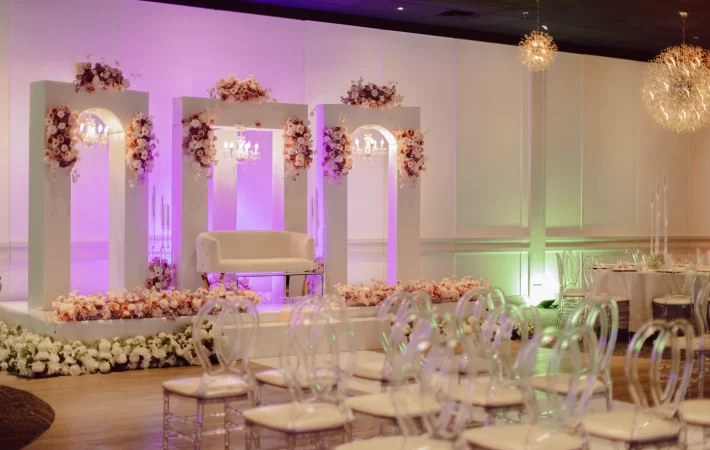
A restaurant dinner, a home gathering and a rented venue each offer a different starting point. Consider what the space already contributes: attractive walls, existing furniture, a view, warm lighting or a strong colour. Work with those qualities rather than covering everything. A setting with character may need only a few personal additions, while a plain room can benefit from a clearer focal point. The aim is to create a coherent celebration within the real room, not reproduce an image from a different environment.
Ask about access, decorative restrictions and the time available for setup before finalizing the design. Share photographs and measurements of the areas you want styled. A small guest list does not automatically mean a simple installation if the chosen pieces are large or access is difficult. Confirm the practical conditions with the venue and suppliers. The couple should be able to enjoy the party without spending the opening hour resolving a design that was selected without considering where it would actually stand.
Create one clear photo moment for the couple
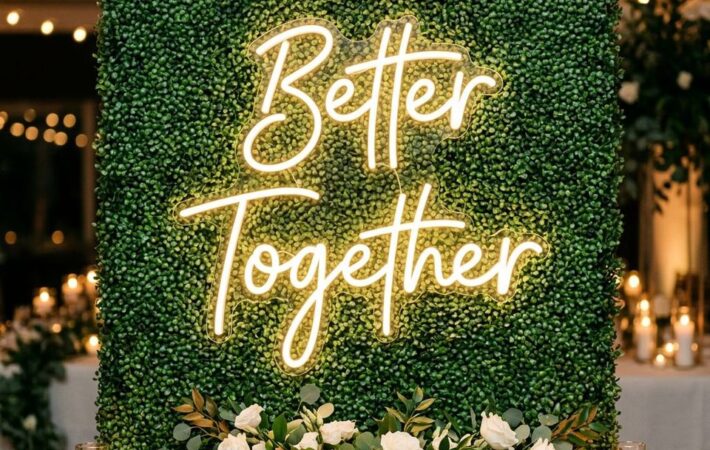
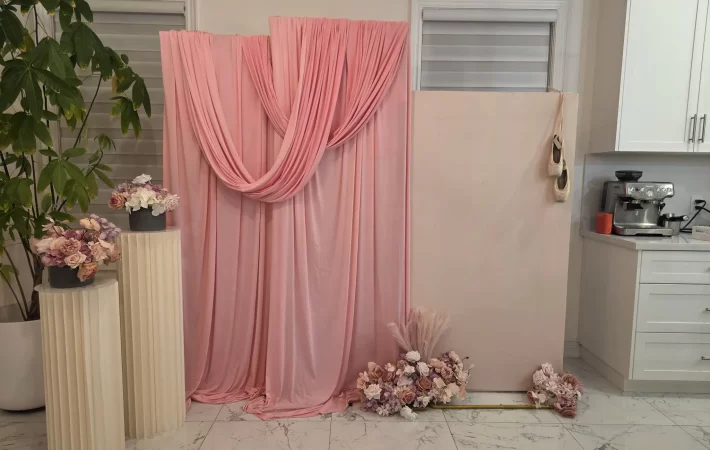
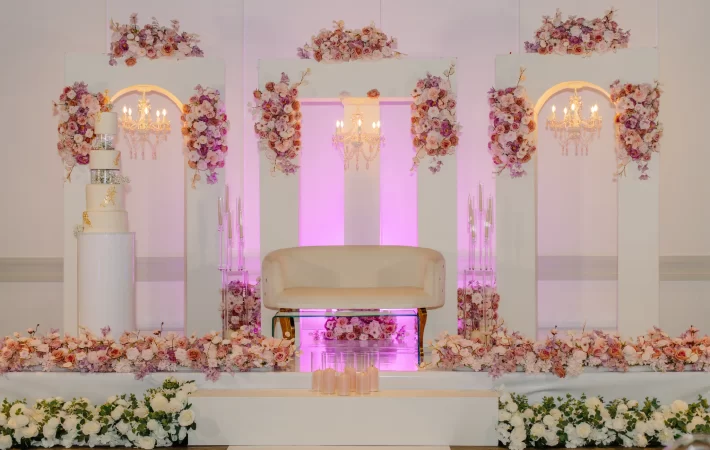
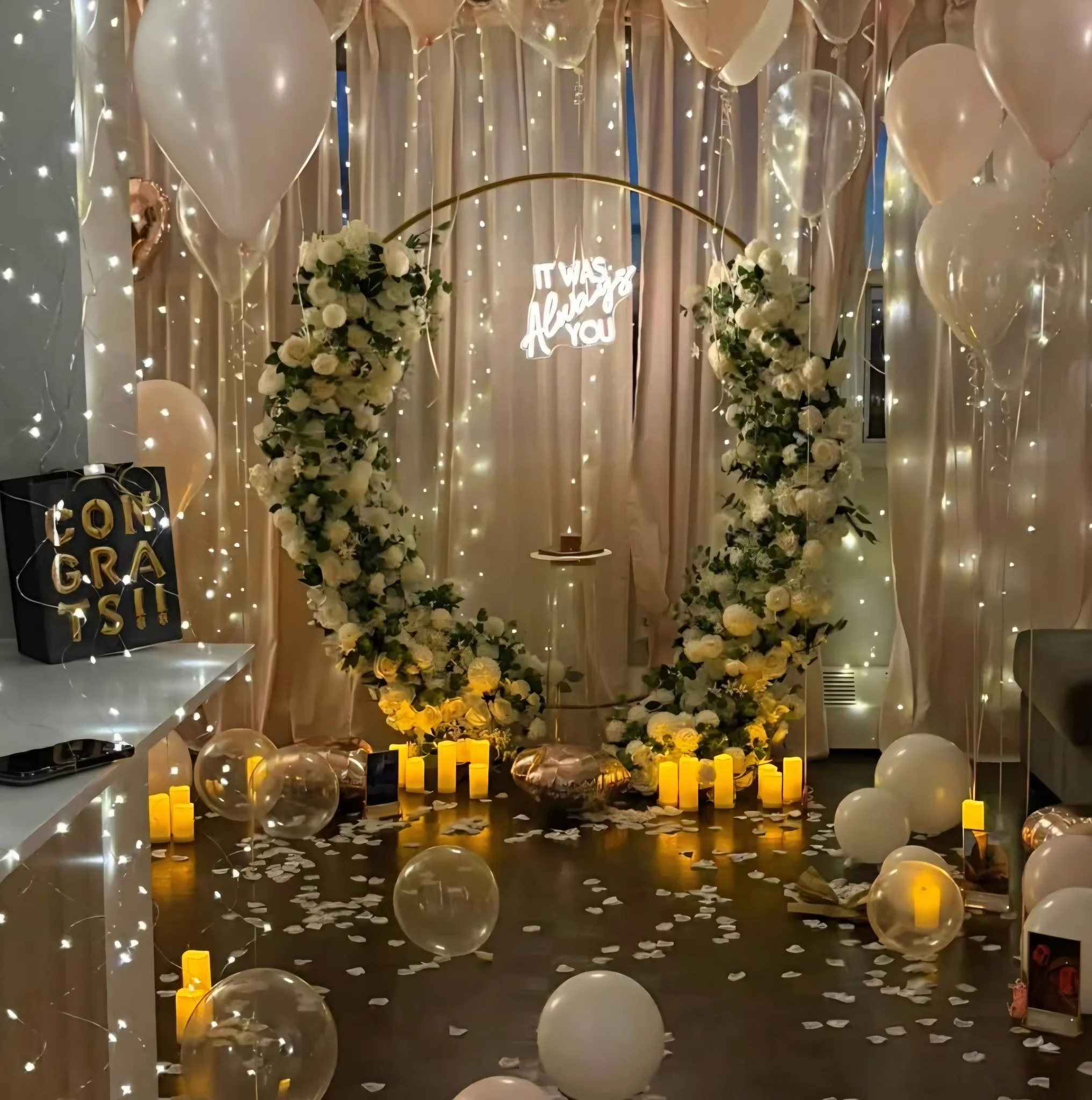
A main photo setting gives the engagement party a recognizable identity. It can be a backdrop with names, a floral feature or a restrained combination of elements that frames the couple. Event Creation’s engagement party decoration service includes options such as backdrops, arches, names, centrepieces and photo experiences. Choose the design according to the space and the kinds of photographs you want, not simply the number of decorative pieces available.
Allow room for the couple together and for small groups of guests. The backdrop should be visible behind people rather than hidden by a large table or oversized wording. Test the camera position and consider what appears around the edges of the image. A clear photo area can encourage natural pictures throughout the party, reducing the need for an extended formal session. The couple can enjoy the setting with family and friends without repeatedly moving furniture or asking others to leave a busy walkway.
Keep names and wording personal but flexible
Names, initials or a simple engagement message can identify the occasion without committing the couple to a future style. Check the exact wording and preferred names before production. If a wedding date has not been confirmed, do not add one merely to fill space on a sign. A concise message can be more elegant and useful than a display crowded with quotations, dates and several different slogans. The text should remain readable in photographs and comfortable for the couple to keep afterwards.
Consider which language or languages feel natural to the families involved. Ask the couple to approve translations and scripts rather than assuming what a cultural or family background requires. The wording should reflect their own relationship and preferences. A personal sign does not need to explain the entire story. A few carefully chosen words can create recognition while leaving the conversation and shared experience to provide the meaning around them.
Make family introductions easier through the layout
If the party brings together people who have not met, design for conversation. Provide comfortable places to pause and keep the main greeting area separate from food service. A host can introduce people with a simple point of connection instead of leaving the couple to manage every interaction. Avoid placing two family groups on opposite sides of the room by default. The layout should make it easy for guests to meet naturally without turning the event into a formal introduction exercise.
For a seated meal, think about the relationships around the table and any practical needs guests have mentioned. Mixed seating can work well when it is considerate, but do not separate everyone from familiar company merely to force conversation. For a standing reception, ensure there are usable places to sit and put down a drink or plate. A welcoming environment comes from ordinary comfort as much as visual style. Guests who can settle easily are more likely to connect with people they have just met.
Give the table its own practical design
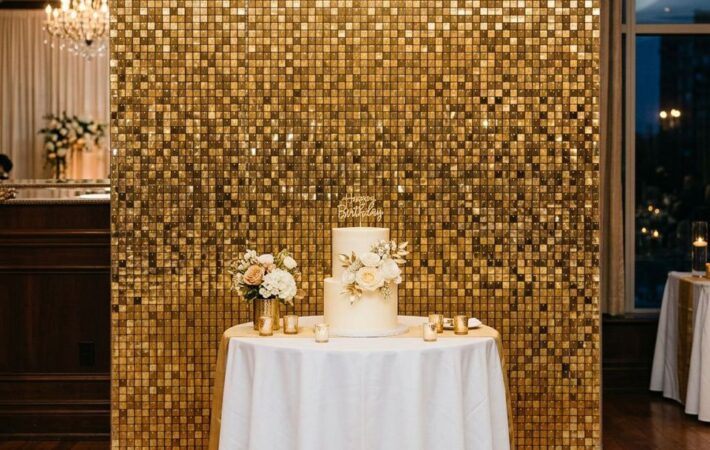
The table should reflect the party’s mood while serving the meal. Start with the food arrangement and the venue’s tableware, then choose decorative details that fit. A few repeated colours or a simple floral approach can connect it to the main display. Avoid turning every table into a miniature version of the backdrop. The dining setting has a different purpose: it needs to support conversation, food and guests’ belongings without becoming visually crowded.
Event Creation’s table setup and centrepiece services can be discussed around the table shape and service style. Explain whether dishes are shared, served individually or presented elsewhere. Ask how the proposed pieces affect sightlines and working space. The finished table should look considered even after people begin eating. A practical arrangement that remains comfortable through the event is more successful than an elaborate composition that has to be dismantled before the first course.
Select flowers for this celebration
Flowers can give an engagement party warmth and texture without setting a requirement for the wedding. Choose the role they will play: a focal detail, table arrangements, an entrance accent or a combination of a few carefully placed pieces. The scale should follow the current room and guest experience. Do not feel obliged to match a hypothetical future bouquet or ceremony design. You can enjoy a floral direction now and make different choices later.
Event Creation offers flower decorations with artificial pieces and fresh floral design by custom quote. Discuss the material and the exact proposed look so expectations are clear. Fresh flowers depend on the final design and availability, and reference images should be treated as a direction rather than a promise of identical stems. Confirm collection and ownership arrangements too. If the couple hopes to keep or gift arrangements, that should be agreed before the party rather than decided during cleanup.
Use personal references without turning the room into a timeline
A few details from the couple’s life can make the celebration distinctive. A place they enjoy, a shared interest or an approved photograph can provide a warm reference. Choose material both people are comfortable sharing and keep it understandable to guests. The party does not need to display every stage of the relationship. A small selection encourages genuine conversation, while a dense timeline can feel like a presentation guests are expected to study.
Avoid private messages, intimate stories or photographs that one person would rather keep personal. Ask permission before including material supplied by friends or relatives. The fact that an engagement is being celebrated publicly does not make every part of the relationship public. Choose details that invite guests into the occasion without exposing private history. A meaningful reference can be subtle, such as a colour, song or small printed note, rather than a large display explaining its entire significance.
Keep the toast focused on the engagement
A short toast can give the gathering a clear shared moment. Decide who will speak and roughly when, then coordinate with the meal or music. The remarks can welcome guests, acknowledge the couple and express warm wishes. There is no need to use the toast to announce wedding plans that are unfinished or to invite public opinions about them. The engagement itself provides enough reason to celebrate.
Ask speakers to keep stories considerate and understandable to the whole room. Private jokes, comparisons with previous relationships or pressure about future decisions can make the couple uncomfortable. A warm, specific observation is usually more meaningful than a long speech full of advice. Let the couple know whether they are expected to respond. They may want to say a few words together, thank guests informally or simply enjoy the moment. The program should respect that preference rather than creating an unexpected obligation.
Choose an activity only if it adds to the evening
Some engagement parties need no formal activity beyond the meal and conversation. Others may enjoy music, a photo experience or a simple guest message collection. Choose based on the group and the atmosphere you want. Avoid adding games solely because there is space in the timetable. An activity that requires personal disclosures or tests how well guests know the couple may feel awkward for newer friends and relatives. The gathering should make people feel included, not evaluated.
If a photo booth or other booked experience is under consideration, confirm the practical requirements for the specific service. Think about where people wait, how long they participate and what others do meanwhile. The attraction should fit comfortably into the party rather than divide it into spectators and participants for long periods. A well-chosen experience can provide a shared memory, while leaving enough time for the couple to speak with the people who came to celebrate them.
Keep future wedding questions from taking over
Guests will naturally ask about the wedding. The couple can prepare a simple answer that reflects what they are ready to share. They may have a date and venue, or they may still be enjoying the engagement. Either is valid. A host can help by keeping speeches and announcements focused on the current celebration. The decor should not imply a schedule, theme or guest list for the wedding unless the couple has explicitly decided to communicate those details.
This also helps manage expectations about the engagement party’s style. A colourful, casual celebration does not promise an identical wedding, and an elegant dinner does not establish a level of formality for every future event. Treat the engagement party as a complete occasion in its own right. That makes the planning lighter and allows the couple to choose what feels right now without feeling that every photograph will later be used as evidence of a design commitment.
Plan a comfortable beginning and ending
Make arrival clear through the invitation, the entrance arrangement and a named host contact. Guests should know where to go and what is available when they arrive. If the couple will enter later, explain how the welcome period works so people are not left waiting without direction. The opening sets the party’s tone and can be simple: a warm greeting, a usable gathering area and a clear indication of when food or the main toast will happen.
At the end, allow time for farewells and collection of personal items before suppliers remove decor. Confirm which pieces are rentals and who will gather cards, gifts or keepsakes. The couple should not have to manage every practical task after spending the evening hosting. Assign a trusted person to handle the agreed closing responsibilities. A calm ending helps the celebration feel generous from beginning to end rather than like a lovely room followed by a rushed packing job.
Keep a small approval list for personalized items. Record the exact names, chosen wording, colour direction and the person authorized to approve changes. This is especially helpful when relatives are contributing ideas or funding individual pieces. Suppliers should receive one final instruction rather than several competing versions. Review the details together before production and retain the approved reference. The process can stay simple, but it protects the couple’s preferences and prevents a well-meant addition from changing the design without their knowledge.
Review the design as a complete guest experience
Look at the final plan from arrival through food, photographs and conversation. Does each area have a clear purpose? Can guests move without crossing another activity’s working space? Are the personal details readable and proportionate? Remove additions that make the room busier without improving the experience. The most coherent engagement styling often comes from a few clear choices repeated thoughtfully, not from treating every available surface as another opportunity to decorate.
When you contact Event Creation, share the date, venue, guest count and the kind of engagement gathering you want. Include approved names, colours and reference images, and explain which moments matter most. Confirm the selected pieces and service arrangements in writing. With its own mood, a welcoming layout and personal details the couple enjoys, an engagement party can feel complete on its own while leaving the wedding’s possibilities open.
Planning your own event? Share the date, venue and the look you want. We will contact you within 24 hours to talk through design ideas and pricing.