Fresh Flower Budgets: How to Request a Useful Custom Quote
Fresh flowers are custom work, so a useful floral budget begins with a description of the event rather than a single price per arrangement. The number of pieces matters, but so do their size, placement, materials and the time they need to be ready. A bouquet, a table arrangement and a ceremony installation cannot be compared as interchangeable units.
Event Creation offers fresh floral design by custom quote. Its website explains that season, flower selection, scale and venue influence the proposal. That means a host can improve the quotation process considerably by providing a clear brief and identifying where flexibility is possible.
The goal is not to choose every stem before speaking to the team. It is to explain what the flowers need to accomplish, which details are important and how the available budget should be divided. The following approach helps you request a proposal that can be evaluated and revised without losing the character of the design.
Start with an inventory of floral locations
List every place where you are considering flowers. For a wedding, that might include personal flowers, the ceremony focal point, guest tables, the head table and the cake display. For a corporate dinner, it might be registration, dining tables and a stage. A shower may need only a main backdrop accent and a few table arrangements.
Separate confirmed locations from ideas you are still considering. This prevents a long inspiration list from being interpreted as an approved order. If the budget will not cover every location, the team needs to know which ones are most important before developing the concept.
Use the flower decoration service as a way to identify the kinds of work available, then relate them to your room. You might discover that a floral accent on an existing backdrop serves your purpose better than an additional freestanding installation. The location list becomes the foundation for a quote with clear quantities and priorities.
Count pieces using the actual event layout
Guest count does not directly tell a florist how many centrepieces you need. The table plan does. A change in table size or arrangement can alter the number of pieces even when attendance stays the same. Provide the expected table count and identify any tables that should receive different treatment.
Distinguish guest tables from the head table, cocktail tables, gift table and other surfaces. A small welcome arrangement and a long main-table design should not be recorded under one general quantity. The proposal needs enough detail to show which floral treatment belongs in each location.
If the seating plan is still developing, request a quote based on a stated assumption and ask how later quantity changes will be handled. Keep the assumption visible. This is more useful than treating an early estimate as a fixed count and discovering near the event that several tables have no assigned arrangement.
Describe scale in relation to people and furniture
Words such as lush, minimal and elegant communicate a feeling, but they do not establish size. Show the team the tables, backdrop or ceremony area the flowers will occupy. Explain whether the arrangement should be a close-up detail or a feature visible across a large room.
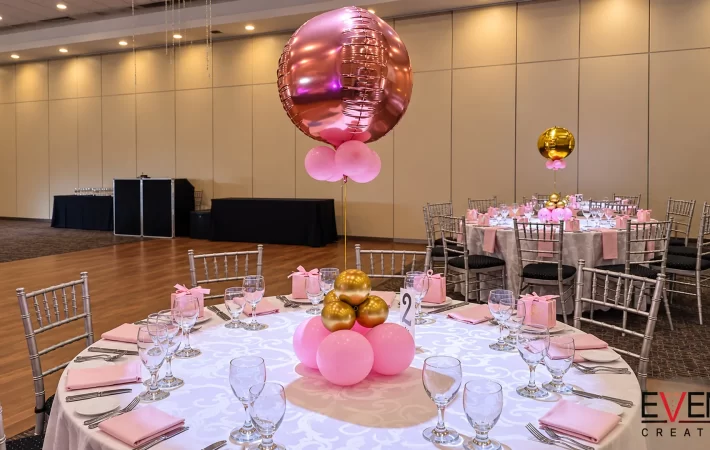
For table flowers, think about conversation, place settings and the other objects on the surface. An arrangement must coexist with food service, glasses, table numbers and any candles or favours. For a backdrop accent, consider whether flowers should frame a name, soften a corner or form the main visual feature.
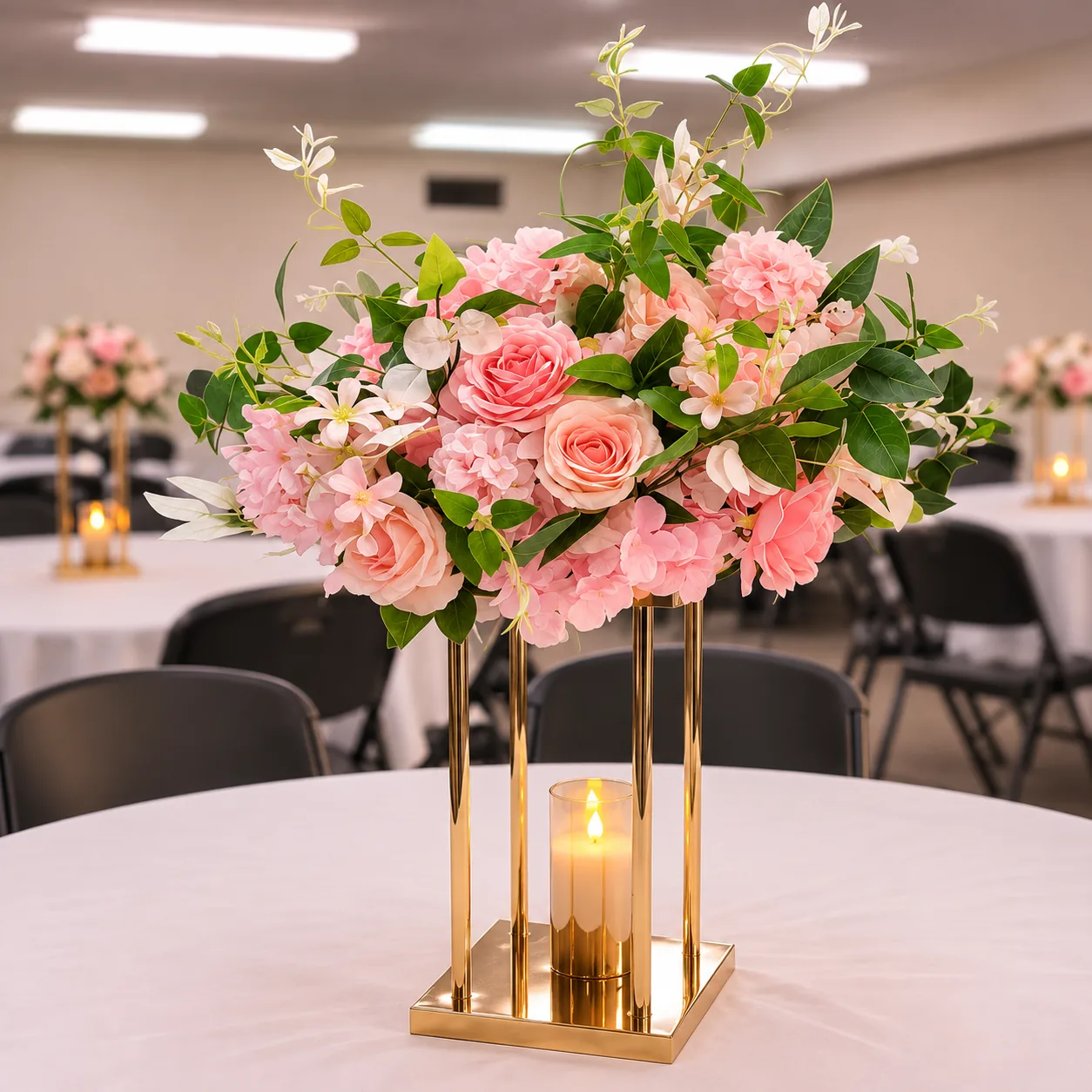
The floral centrepiece page provides a starting point for discussing low, tall or mixed designs. Ask the team to translate your preferred look into a scale appropriate for the furniture. A meaningful floral budget funds the right size for the task, not simply the fullest arrangement that can be described in a quotation.
Identify the flowers that matter personally
If a particular flower has significance for you, say so at the beginning. It may be connected to a family memory, a preferred colour or the look of an outfit. The team can then distinguish that important detail from flowers appearing incidentally in a reference image.
At the same time, identify where you are flexible. You may care strongly about the colour palette and overall shape while being open to the exact varieties. Event Creation’s website describes fresh floral quotes as dependent on season and selection, so this flexibility belongs in the budgeting conversation.
Avoid assuming that a photograph taken in another setting establishes what will be available for your date. Ask the team to explain the proposed approach and any alternatives. A clear brief can preserve the part of the design that matters most while allowing practical decisions about the rest of the arrangement.
Build the palette before collecting more references
A growing folder of floral photographs can make the quote harder to define if every image uses a different palette. Choose a limited direction and explain how it relates to the room, clothing, invitations or brand colours. This gives the team a consistent basis for the proposal.
Use references to show distinct qualities. One photograph might demonstrate the shape you like, another the colour relationship and a third the amount of open space. Label those details rather than asking for all three images to be combined in full. The resulting design can then be specific without becoming crowded.
If colours are still undecided, avoid requesting several fully developed concepts at once. Start with the main direction and ask what information is needed to refine it. A focused palette discussion reduces the risk of comparing floral quotes that appear similar in price but are actually based on very different expectations.
Decide where fresh flowers have the greatest value
Event Creation’s floral information describes the possibility of combining fresh flowers with artificial florals or other catalogue accents. The relevant question is where guests will be close enough to appreciate the chosen material and where a different treatment might serve the design just as well.
Personal flowers, a main table and a ceremony focal point may deserve particular attention. A large background viewed from farther away may offer more options. These are design decisions to discuss with the team, not a rule that certain locations must always use one material.
When comparing alternatives, ask for the material change to be described clearly. Do not assume that an artificial option automatically costs less in every situation; size, structure and installation still matter. The quote should explain what is being supplied so you can assess the result and the price together, rather than treating all floral-looking pieces as equivalent.
Keep personal flowers in their own part of the quote
Bouquets, boutonnieres and other personal flowers serve a different purpose from room decoration. They may need to be ready for photographs before the venue setup is complete, and they involve individual recipients. Keep them in a separate list with quantities and the people or roles they are intended for.
Confirm the required ready time and handover location. If personal flowers are needed somewhere other than the reception venue, the team needs that information before finalizing the proposal. Do not assume their delivery is automatically covered by the timing for a backdrop or table arrangements.
It is also helpful to distinguish the main bouquet from other personal pieces rather than requesting one general “wedding flowers” amount. The fresh flowers service can form the basis for a conversation about the complete list. A separated scope makes later changes easier to understand and keeps a change in one area from obscuring the rest of the floral budget.
Treat vessels and supports as part of the design
Flowers are often presented in containers, on stands or within larger structures. Those supporting pieces influence the appearance and practical arrangement. Ask the quote to identify what is included with the florals and which components are rentals that need to be returned.
A centrepiece on a stand is not the same scope as flowers placed in a vessel you provide. Likewise, a floral arch involves the arrangement and the structure or setting it belongs to. If the venue or another supplier provides a component, make that responsibility explicit.
Do not assume ownership from the fact that an item contains flowers. Some pieces may be collected with the rentals, while other arrangements may be handled differently under the booking. Discuss what happens after the event before planning gifts for guests or asking family members to take arrangements home. The agreed return and collection plan should match the quotation.
Price ceremony reuse as a separate proposal
Using ceremony flowers again at a reception can be worth exploring, but it is not automatically a saving. The pieces must be suitable for moving, the timing must work and someone must be responsible for the transfer and placement.
Ask for the reuse plan to name the original location and the later destination. A piece designed for a ceremony focal point may not fit a dining table without changes. The team should assess whether the proposed second use is practical and what work it involves.
Compare that complete plan with separate arrangements for the two locations. This is especially relevant when the ceremony and reception are at different addresses. Avoid counting the same flowers twice in your expectations while budgeting only for their first installation. A clearly quoted reuse option lets you consider value without depending on an unconfirmed move during an already busy part of the day.
Explain the timing and conditions of the event
The floral team needs to know when arrangements will be photographed and how long they must be in place. An early ceremony followed by a late reception creates a different schedule from a short evening dinner. Outdoor and indoor locations also need to be identified in the brief.
Share the venue’s access arrangements and the intended placement, including any area exposed to direct sun or close to heating or cooling outlets. The supplier can advise on an appropriate design and setup sequence. You do not need to make technical promises about how particular flowers will behave.
If the event has an indoor backup location, include it before the quote is accepted. Ask how the floral concept would be adapted if the plan changes. Budgeting for a clear arrangement is more useful than assuming that every piece can be moved anywhere without affecting size, timing or handling.
Ask for a base design and focused alternatives
Once the key locations and priorities are clear, request a base floral proposal. Then choose one or two meaningful alternatives to compare. You might explore a different centrepiece size, fewer floral locations or a combination of fresh arrangements and other accents.
Keep the comparison focused. If every version changes flower selection, quantities, size and placement at the same time, it becomes difficult to understand what drives the price difference. Ask the team to describe the main change and how it affects the look.
A hypothetical example is a dinner with flowers on all guest tables and one larger main-table arrangement. One revision could simplify the guest-table pieces while preserving the main table. Another could retain the guest tables and reduce a separate entrance feature. The actual prices require a quote, but the alternatives let you decide where the budget should be concentrated.
Avoid judging a floral proposal by stem count alone
A stem count can be useful when a supplier includes it, but it does not explain an entire design. The arrangement’s dimensions, flower types, shape, supporting materials and preparation all affect the result. A comparison that focuses only on quantity can overlook whether the piece suits its intended location.
Ask to understand the visual outcome instead. What will the arrangement look like from a seated guest’s position? How much of the backdrop will it cover? Does it leave the couple or speaker visible? Is it designed to be viewed from one direction or several? These questions connect the quoted work to the event.
The purpose is not to avoid detail. It is to choose details that help you evaluate the proposed design. A well-described arrangement gives you more useful information than a large number with no relationship to the table, room or photographs you are planning.
Keep floral spending separate from unconfirmed extras
The floral concept may prompt ideas for candles, signs, additional backdrops or table styling. Those additions can complement the flowers, but they should not be silently absorbed into a floral total. Ask which are included and which are separate options.
This is particularly useful when you are booking several services from one team. One coordinated proposal can still show the different parts of the scope. You should be able to see what belongs to fresh floral design, what comes from the rental catalogue and what is an optional decorative addition.
If the overall event budget becomes tight, that separation helps you make a deliberate revision. You may decide to preserve the flowers and simplify another element, or the reverse. Without a clear scope, it is easy to request a smaller “flower budget” and unintentionally remove the detail that mattered most in the original concept.
Confirm the final quantities and approval details
Before accepting the floral proposal, review the number of arrangements, their locations, the agreed palette and any important flower preferences. Check personal-flower recipients separately from room arrangements. Confirm which details are final and which depend on a later decision.
Ask how substitutions or design adjustments will be discussed if needed. The answer should come from the actual booking arrangement rather than a general assumption about all florists. Keep the agreed process with the proposal so the person approving the flowers understands what they are authorizing.
Save the current table plan and venue information alongside the quote. If the count or room changes, request an updated version. The best floral budget is one that stays connected to the real event as it develops, rather than a number chosen early and never checked against the finished plan.
Share a useful reference set
Choose a small set of images that agree with one another and add a sentence explaining each selection. “I like this loose shape, but not the colours” gives the team a much clearer instruction than an unlabeled photograph. Likewise, explain when an image represents an ambition rather than a literal requirement for every table.
Include one photograph of the real room among the inspiration images. That simple addition keeps the conversation grounded in the ceiling height, furniture and existing surfaces your design must work with. It also makes it easier to identify where a floral treatment would be seen clearly and where another decorative element already provides enough interest. A focused reference set supports a more relevant proposal and reduces the chance of paying to reproduce details that were never important to you.
Turn your floral ideas into a clear brief
A useful request includes the occasion, date, venue, floral locations, expected quantities, palette, reference images and a budget range. Explain the details that are personally important and the areas where you are open to suggestions. Include setup and photograph timing where they are already known.
You do not need to know the cost of every flower to begin. You need a clear picture of what the flowers should contribute to the celebration. Contact Event Creation with that brief and request a custom floral proposal. The resulting conversation can then focus on a design that suits your room and priorities, with the scope and price understood together.
Planning your own event? Share the date, venue and the look you want. We will contact you within 24 hours to talk through design ideas and pricing.